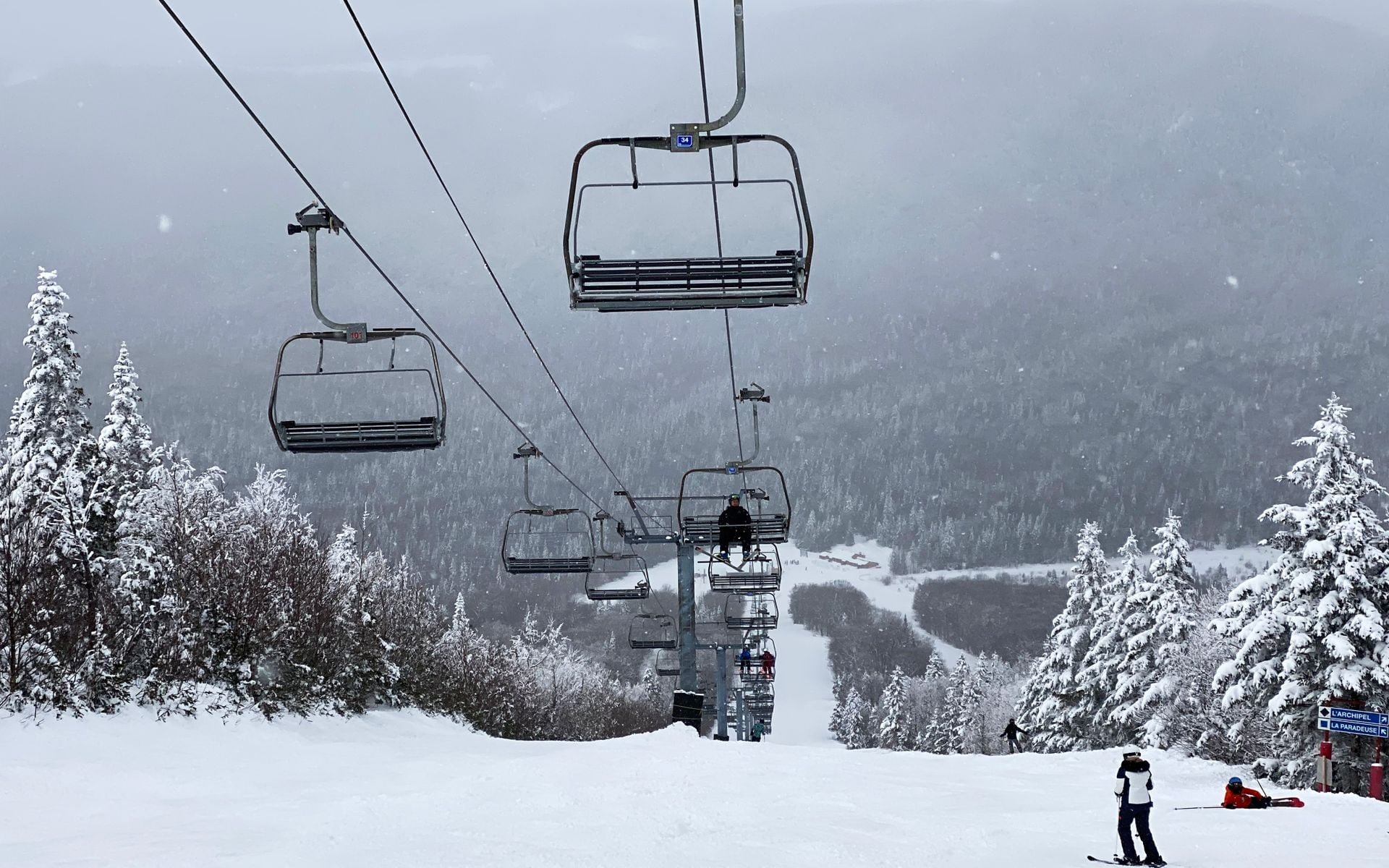
About Ski Resorts in Vermont
Vermont's ski season runs roughly from early December through late March, though the range varies by mountain and by winter. Killington Resort in the central Green Mountains routinely opens ahead of every other resort in the East, sometimes as early as October when early snowmaking allows, and keeps lifts spinning into late April or even May. At the northern end of the state, Jay Peak Resort near the Canadian border pulls in an average of 350-plus inches of natural snowfall annually because it sits directly in the path of winter storms tracking down from Quebec. That gives Jay conditions that most Vermont mountains can only produce with snowmaking.
The state has one mountain that defines the ski-town image: Stowe, 45 minutes east of Burlington International Airport (BTV), where the trails drop off 4,395-foot Mount Mansfield into one of Vermont's most walkable villages. But the full picture is wider. Killington Resort operates 155 trails across six peaks with more than 3,000 feet of vertical, making it the largest ski area in the eastern United States. Sugarbush Resort runs two connected mountains in Warren in the Mad River Valley, with 111 trails split between Lincoln Peak and Mt. Ellen. In southern Vermont, Stratton Mountain Resort and Okemo Mountain Resort anchor two separate ski communities, both drawing heavily from New York and the Connecticut coast via I-91.
Smaller mountains fill in the map. Smugglers' Notch Resort in Jeffersonville is built around families, with a ski school for children as young as three and a self-contained resort campus that makes it easy for parents and kids to move between activities. Bromley Mountain Ski Resort near Peru in the southern Green Mountains has 48 trails and a sun-facing slope that makes it one of the warmest, most forgiving days you can have on skis in New England. Bolton Valley Resort, about 35 minutes east of Burlington, runs 71 trails and has a backcountry access gate that serious off-piste skiers use to extend into the surrounding terrain.
Pass holders should verify current affiliations before planning a trip, since Vermont's major resorts are distributed across the Ikon Pass, the Epic Pass, and the Indy Pass, and those relationships shift. If you ski more than five or six days per season, the math usually favors a multi-resort pass over buying individual tickets. For a broader look at how Vermont's regions connect during the ski months, start with the Vermont Travel Guide, which covers the state from the Northeast Kingdom to the southern Green Mountains.
How to Choose a Vermont Ski Resort
The right resort depends on who you're skiing with, how far you're traveling, and whether you want terrain variety, natural snow, a family-focused setup, or a lower daily cost.
For families with young children or beginners, Smugglers' Notch Resort in Jeffersonville consistently earns strong marks for its organized ski school and the way the resort campus keeps families together without requiring a car mid-day. Okemo Mountain Resort near Ludlow is another solid pick for beginners: 121 trails across four peaks, broad groomed runs on the lower mountain, and lift infrastructure that keeps lines from stacking up even on holiday weekends. Both resorts allow first-timers to build confidence without feeling overwhelmed by expert terrain.
Intermediate and advanced skiers who want the most mileage in a single trip should be looking at Killington Resort or Sugarbush Resort. Killington's six-peak system means you can ski a genuinely different section of the mountain each morning without repeating terrain. The trade-off is crowds: on winter weekends and especially during school vacation weeks in February, lines at the main K1 Express gondola can stretch to 20 or 30 minutes. Buying lift tickets midweek versus a Saturday peak date saves real money too. Estimated window prices at major Vermont resorts run $130 to $200-plus per day during high-demand periods, compared to pre-purchased midweek tickets that often land in the $100 to $150 range depending on booking timing. Sugarbush draws a quieter crowd, particularly locals and regulars who have skied it for years, and the Mad River Valley setting outside Warren rewards the slightly longer drive from most arrival points.
If natural snow quality is the deciding factor, Jay Peak Resort is the answer. The drive from Burlington takes about 2.5 hours on Route 100 north through the Northeast Kingdom, and the resort sits in one of the more remote pockets of the state. But when a storm tracks in from Quebec, Jay peaks before most Vermont mountains do, and the terrain, including a steep collection of gladed runs and a gondola that reaches above 3,900 feet, rewards skiers who time their trips around the forecast.
Southern Vermont has its own advantages. Stratton Mountain Resort and Okemo in Ludlow are closer to New York City and the Connecticut coast than any resort in the north, and for skiers driving up on a Friday, shaving an hour off the commute matters. Bromley Mountain Ski Resort near Peru is a good option if you're based in Manchester and want a low-key half-day rather than a full resort commitment.
After the lifts close, the options around Vermont's mountains are worth planning around. The Restaurants directory covers dining near the major base areas, and the Breweries, Cideries and Tours listings include the taprooms and après-ski stops that most ski-town regulars cycle through during a winter stay. Vermont ski towns also look different once the snow is gone. The Best Fall Foliage Drives in Vermont routes pass through or near Stowe, the Mad River Valley, and Manchester, meaning a resort you ski in February might be the same base you return to in October for foliage.