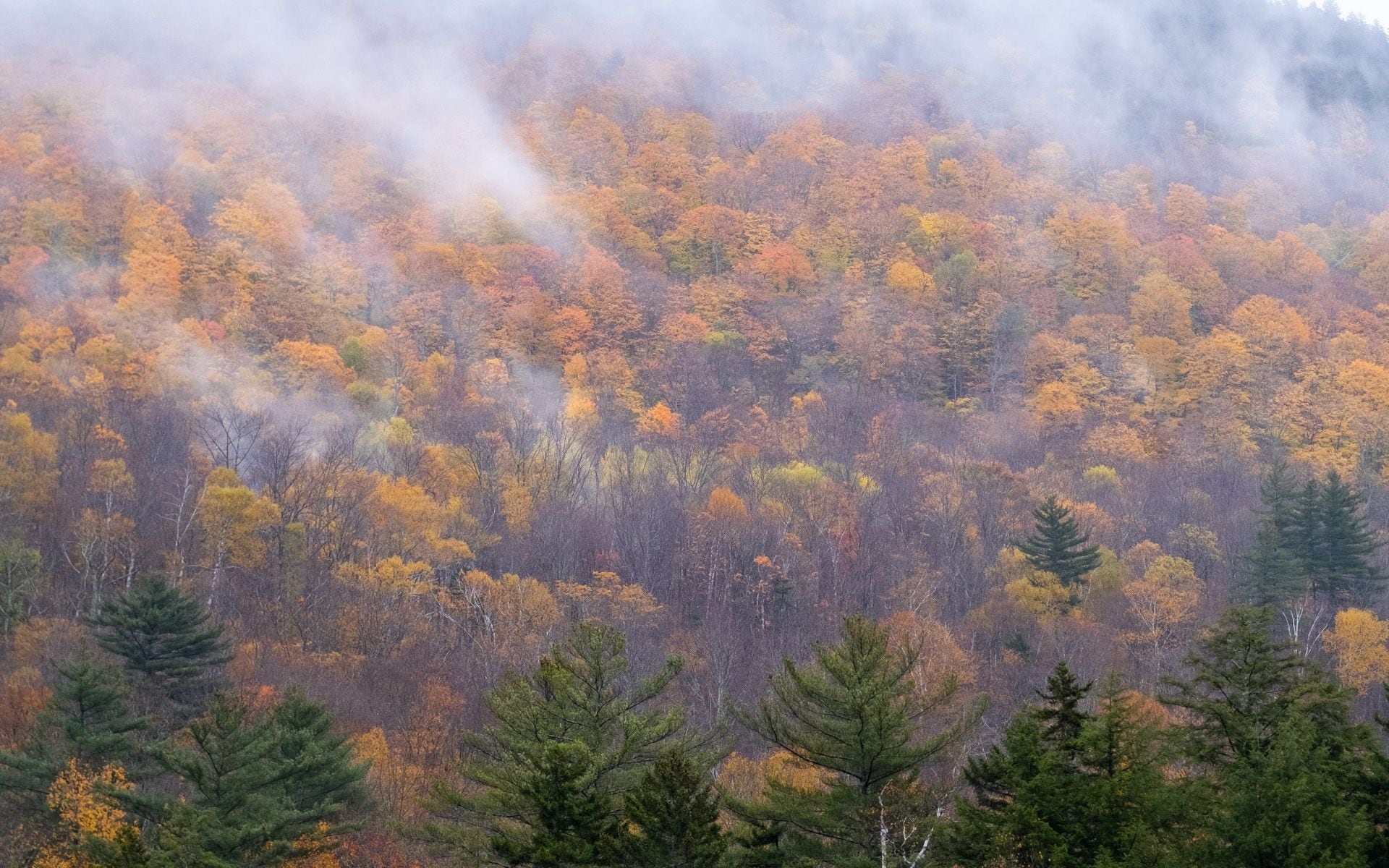
The Short Answer
In most years, peak foliage in Vermont falls somewhere between September 28 and October 15, with the window shifting by latitude and elevation. The high country and the far north turn first, and color works its way downhill and south over two to three weeks. For a single-weekend trip, aim for the first full weekend of October if you're based in northern or central Vermont, and the second or third weekend of October if your base is Woodstock, Manchester, or Brattleboro. The Vermont Travel Guide has a full seasonal overview if you're still weighing when to come.
Foliage timing also varies year to year by one to two weeks. A warm, wet September pushes peak later. A dry summer with cooler nights in late August or early September can nudge color slightly earlier. No prediction is exact, but the regional pattern, north before south, high before low, holds reliably across years.
How Elevation and Latitude Control the Timing
Two factors drive Vermont foliage timing: latitude and elevation. The Northeast Kingdom, Vermont's wild northeast corner bordering Canada, sits both farther north and at higher average elevation than southern Vermont, which is why it consistently peaks first. The same logic works within any given valley: look up at the ridge above you and the trees are turning a week or two ahead of the valley floor.
The high peaks demonstrate this most clearly. Mount Mansfield at 4,395 feet, the highest point in Vermont, and Camel's Hump at 4,083 feet in the central range both show color on their upper slopes as early as mid-September, while Stowe village below is still largely green. A drive up the Mount Mansfield Toll Road in the third week of September can already show near-peak alpine color on the exposed ridgeline. Valleys along the Connecticut River, Woodstock, Quechee, Norwich, sit lower and farther south, which is why they lag by ten to fourteen days. For context on the full seasonal calendar, the Best Time to Visit Vermont page covers summer, winter, and mud season too.
Vermont Foliage Timing by Region
The table below shows typical peak windows averaged across recent years. Dates shift by about a week in either direction depending on the summer and early fall weather, treat these as planning guides, not exact forecasts. "Peak" means 75 percent or more of the canopy at full color.
| Region | Early Color Begins | Typical Peak Window | Past Peak |
|---|---|---|---|
| Northeast Kingdom (Burke, Lake Willoughby, Island Pond) | Sept 15–22 | Sept 28 – Oct 7 | Oct 8–14 |
| Stowe & Northern Green Mountains (Jay Peak, Morrisville) | Sept 20–27 | Oct 2–11 | Oct 12–17 |
| Central Vermont (Montpelier, Mad River Valley, Middlebury) | Sept 25 – Oct 1 | Oct 5–14 | Oct 15–20 |
| Woodstock & Upper Valley (Quechee, Norwich) | Sept 28 – Oct 5 | Oct 8–17 | Oct 18–23 |
| Southern Vermont (Manchester, Brattleboro, Wilmington) | Oct 3–10 | Oct 12–21 | Oct 22+ |
Where to Drive for the Best Color
The Northeast Kingdom consistently delivers the earliest and most concentrated fall color in Vermont. Route 5A along Lake Willoughby in Orleans County is one of the most reliable early-season drives in New England: the 300-foot cliffs of Mount Pisgah and Mount Hor drop directly to the lake surface, and the birch and maple mix on their slopes turns by late September. From Willoughby, Route 114 through Island Pond and the back roads toward Burke Mountain extend the drive into the interior of the Kingdom. If you fly into Burlington International (BTV) and head northeast on I-89 to St. Johnsbury before turning north on US-5, the drive runs about 80 miles and takes roughly 90 minutes.
For central and northern Vermont, Route 100 running north-south through the heart of the Green Mountains is the primary foliage corridor. The 30-mile stretch from Morrisville south through Stowe village to Waitsfield and the Mad River Valley is reliable in early to mid-October. For the Upper Valley, Woodstock on Route 4 along the Ottauquechee River tends to peak in the second week of October and holds color well into the third week because the river bottom stays sheltered from early frosts. The Getting Around Vermont page covers the full road network if you're planning a multi-day loop that strings together multiple regions.
Practical Tips for Timing Your Foliage Trip
Book lodging significantly earlier than you think you need to. Inns in Stowe, Woodstock, and Northeast Kingdom towns like Burke and St. Johnsbury fill 6 to 8 weeks ahead of the first two weekends of October. Traveling Monday through Thursday in the peak window saves real money: country inn rates run an estimated $150–$350 per night on weekdays versus $250–$450 on a peak Saturday, and the village centers, popular bridges, and roadside overlooks are far less crowded than on weekends. The Route 5A corridor at Lake Willoughby and the Woodstock village green in particular see heavy weekend foot traffic in peak weeks.
Vermont's official weekly foliage reports, published by the state's tourism bureau and updated each Wednesday during the season, are worth checking in the final week before you travel. They report color status by region and elevation, moving from early color through near peak, peak, and past peak. Most years the reports start in early September. On the ground, innkeepers are often the most accurate local source during the season: they drive the back roads every morning and know which corridors are running ahead of or behind the official forecast. Ask them where they went that morning.
For arrival logistics, Burlington International (BTV) is the most convenient airport for the northern half of the state, sitting 45 minutes from Stowe by car and about 90 minutes from St. Johnsbury. For Woodstock, Quechee, and southern Vermont, Boston Logan (BOS) or Manchester-Boston (MHT) in New Hampshire put you within two to three hours of the best southern foliage zones without backtracking. The Vermont Airports and Getting There page covers all arrival options and typical drive times to key destinations. A rental car is essential anywhere outside downtown Burlington: Vermont's foliage routes run on two-lane state highways and dirt back roads that no bus or shuttle serves.
Frequently asked questions
When is peak fall foliage in Vermont?
Peak foliage in Vermont typically falls between September 28 and October 15, but the window shifts significantly by region. The Northeast Kingdom peaks in the last few days of September or the first week of October. Central Vermont, including the Montpelier area and Mad River Valley, runs roughly a week behind that. Woodstock and the Upper Valley peak in the second week of October. Southern Vermont, Manchester, Brattleboro, Wilmington, often doesn't hit full color until the third week of October. High-elevation ridgelines like Mount Mansfield and Camel's Hump can show color as early as mid-September.
Where does Vermont foliage peak first?
The Northeast Kingdom is consistently the first region to peak in Vermont. Towns like Burke, Derby, Newport, and the Route 5A corridor along Lake Willoughby in Orleans County typically hit full color in the last days of September or the first week of October. High-elevation summits across the state, Mount Mansfield at 4,395 feet, Jay Peak near the Canadian border, Camel's Hump at 4,083 feet, also turn early, often showing significant color by mid to late September on their upper slopes while the valleys below are still largely green.
How far ahead should I book lodging for Vermont foliage season?
Book 6 to 8 weeks ahead for the first two weekends of October, particularly in Stowe, the Northeast Kingdom, and Woodstock. Those weekends are the most popular, and small inns fill quickly. If your dates are flexible, the third week of October in southern Vermont typically offers good color, easier availability, and lower rates. Traveling on weekdays throughout the season is significantly easier to book than weekends and saves an estimated 20 to 40 percent on lodging costs.
How long does Vermont fall foliage last?
Peak color in any given area typically lasts 7 to 10 days before the canopy begins to drop. But because foliage moves across the state over two to three weeks, north to south, high to low, a well-routed multi-day trip can follow the color window and extend your experience across the entire state. A trip that starts in the Northeast Kingdom in the last week of September and ends in Manchester in mid-October can stay in near-peak or peak color almost the whole time.