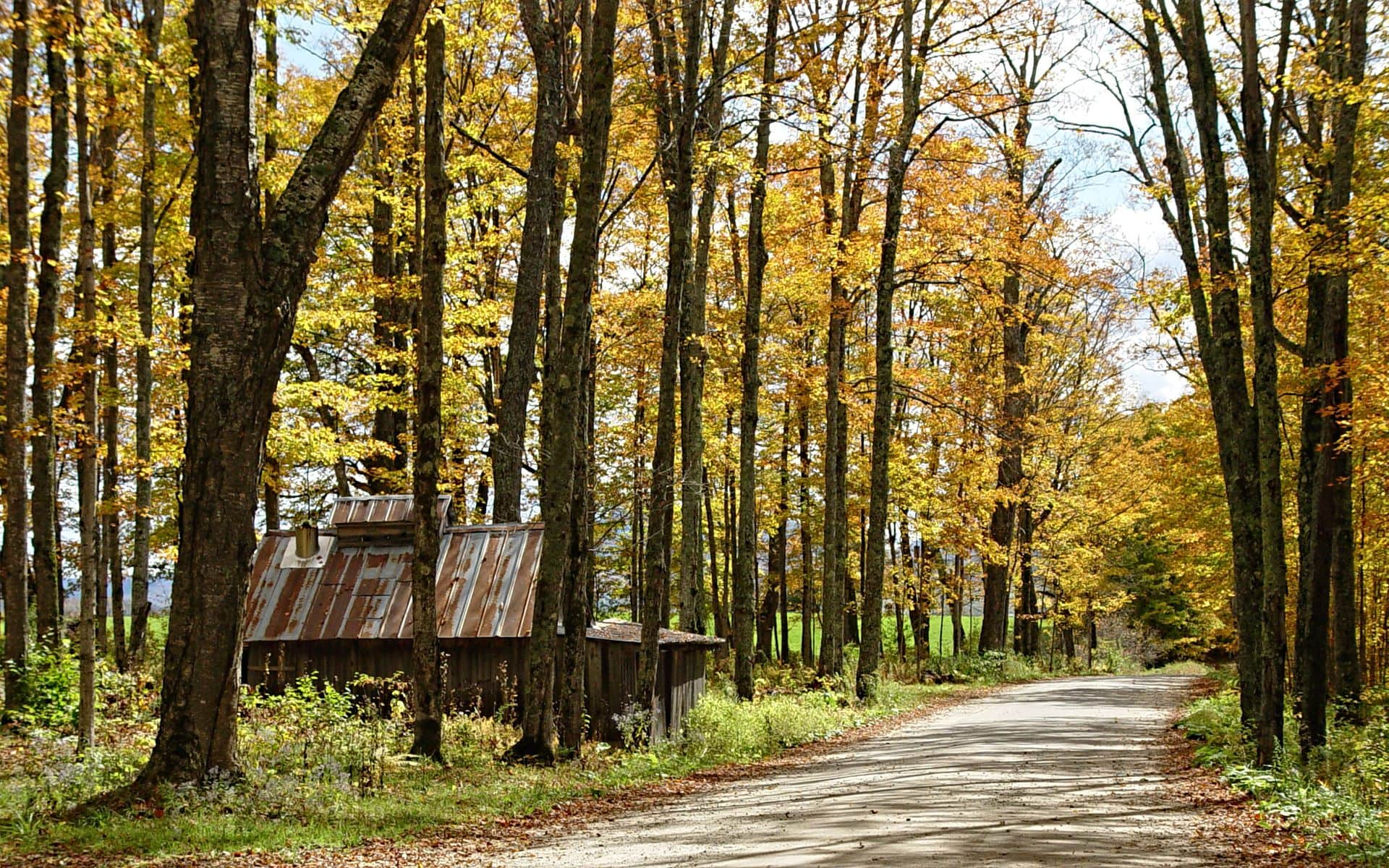
Why Visit Central Vermont
Central Vermont collects the things people associate most closely with Vermont in a single north-south corridor. Route 100, the state's iconic two-lane through the Green Mountains, runs from Waterbury south through the Mad River Valley toward Killington, passing farms, sugarhouses, and forest gaps that open onto mountain views. The towns here read smaller and quieter than Stowe, which makes this region a better fit if you want to ski without fighting a crowded ski-town weekend, or drive through fall color without a phalanx of tour buses. As a base on the Vermont Travel Guide map, central Vermont puts you within reach of the state capital, two serious ski mountains, and one of the more reliable foliage corridors in the state.
The region also carries a concentration of food and drink that punches above its size. Waterbury, at the north end of the Route 100 corridor, holds Ben and Jerry's, a cluster of strong craft beer spots, and Prohibition Pig on South Main Street for smoked brisket and duck fat fries. Middlebury, on the western edge of the region, is a college town with an above-average restaurant scene and Fire and Ice on Seymour Street, a long-running local fixture known for rotating seasonal menus. If you drive the full length of Route 100 from Waterbury south to Killington, roughly 35 miles, you pass a sugarbush operation almost every few miles in late February and March when the sap is running.
Top Places in Central Vermont
Montpelier is the smallest state capital in the country, with no national chain restaurants in the downtown core and a gold-domed State House you can walk into on weekdays for free. The city sits on the Winooski River, roughly 45 minutes east of Burlington via I-89, and its compact main street packs in independent restaurants, a thriving coffee and bakery culture, and a year-round Saturday farmers market in the city park. The Vermont History Museum inside the Pavilion Building runs a rotating exhibit on the state's agrarian and political past and is worth an hour of your time.
Killington anchors the south end of the region. With around 1,500 skiable acres across six peaks, it is the largest ski area in the eastern United States and typically runs the longest season, opening as early as October when snowmaking allows and staying open into late April or May on good snowpack years. In summer the mountain operates a lift-served downhill mountain-bike park and hosts the Killington Brewfest in June. Drive time from Burlington is about 1 hour 30 minutes south on I-89 and then east on Route 4; from Montpelier it is roughly 45 minutes south on Route 2 then Route 100.
The Ben and Jerry's factory in Waterbury runs guided tours daily, with advance tickets recommended in summer and fall. The tour walks you through the production floor and ends with a scoop in the on-site shop, and there is a flavor graveyard out back where discontinued flavors get their own headstones. Waterbury village adds Prohibition Pig for slow-smoked barbecue and Cold Hollow Cider Mill just west on Route 100 for fresh-pressed cider and cider donuts most days through the fall.
The Mad River Valley, about 20 miles south of Waterbury via Route 100, holds the towns of Waitsfield and Warren alongside Sugarbush Resort. Sugarbush spreads across two interconnected mountains, Lincoln Peak and Mount Ellen, with 111 trails and a reputation for strong natural snowfall from northwest-tracking storms. Warren village has a covered bridge accessible by car and a short main street with a solid general store. Mad River Glen, a cooperative ski area on Route 17 just west of Waitsfield, is a Vermont institution: it still bans snowboards, runs a single-chair lift to the summit, and charges lift prices well below the big resorts.
Top Things to Do
Skiing Killington Resort or Sugarbush Resort accounts for most winter trips to central Vermont. Killington's six peaks give you terrain variety hard to match in the Northeast, from groomed cruisers on Snowshed to the steep chutes off Superstar. Sugarbush suits intermediate skiers and those who want strong snow without Killington's crowds; lift tickets at both run roughly $100 to $200 per day depending on when you purchase, with advance online tickets running significantly lower. The Killington Grand Resort Hotel, slope-side at the Snowshed base area, is the most convenient on-mountain option for multi-day ski trips.
Outside ski season the Mad River Valley and Killington both run summer mountain-bike parks with chairlift access. Hiking the Long Trail crosses this part of Vermont, with the Bucklin Trail off Wheelerville Road in Mendon climbing to Killington Peak at 4,241 feet in about three hours round trip, delivering views into New York on clear days. Maple Sugar and Vermont Spice on US-4 in Mendon, just west of Killington village, is a well-regarded breakfast stop open through early afternoon that pours fresh Vermont maple syrup at every table, a detail that earns the place regulars from Rutland and Killington alike.
For a fall trip, check the Best Fall Foliage Drives in Vermont for how to route through Route 100 between Waterbury and Killington, which captures some of the state's best mid-elevation color. The Granville Gulf section of Route 100, between the Mad River Valley and the village of Rochester, runs through a narrow canyon state park with a roadside waterfall and no development for several miles, which makes it a reliable foliage stretch even when the rest of the drive is picked over by leaf-peeping traffic. The Vermont State House in Montpelier is worth a midday stop on any foliage loop through the capital.
Where to Stay
Killington's main lodging cluster sits on Killington Road, the dead-end spur off Route 4 that leads to the resort base lodges. The Killington Grand Resort Hotel sits slope-side at the Snowshed base with pool access and direct ski-on access when snow conditions allow. Rates in peak ski season run roughly $200 to $400 per night for a standard room; summer and fall rates drop considerably. For a full overview of lodging options across the region, the Where to Stay in Vermont page covers inns, hotels, and ski-week condo options at all price points.
In the Mad River Valley, Waitsfield and Warren hold a mix of traditional Vermont inns, ski-week condos, and farm stays within a few miles of Sugarbush. Montpelier has a handful of small inns and bed-and-breakfasts along State Street and Elm Street that work well for travelers splitting time between the capital and the ski areas; the city sits almost exactly midway between Stowe to the north and Killington to the south, making it a useful base for a longer loop through central Vermont.
Getting There and Around
Burlington International Airport (BTV) is the nearest major airport, about 45 minutes north of Montpelier via I-89 and about 1 hour 30 minutes from Killington. Visitors from Boston typically fly into BOS and drive the roughly 3-hour trip up I-89, or use Manchester-Boston Regional (MHT) in New Hampshire and come north on I-93 and I-89. Lebanon Municipal Airport (LEB) in New Hampshire serves the Upper Valley and puts you roughly 45 minutes east of Killington via Route 4. Albany International (ALB) is a reasonable alternative for reaching Killington from the west, about 1 hour 45 minutes via Route 4.
A rental car is required everywhere in this region outside downtown Montpelier. Route 100 is the main scenic north-south connector and slows considerably in foliage season; budget extra time on weekends in late September and early October. I-89 parallels Route 100 from Burlington to Montpelier and is the fastest route between the north and south ends of the region. Route 4 cuts east-west across the state and is the primary road for reaching Killington from both the Upper Valley and the Rutland side.
Best Time to Visit Central Vermont
Killington Resort fires up snowmaking in late October and often opens before Thanksgiving, making it one of the first ski areas to run lifts in the eastern United States. The full mountain usually comes online by mid-December and the resort often stays open into late April. Sugarbush opens slightly later, typically mid-December, but its natural snowfall from northwest-tracking storms gives it reliable mid-winter depth on the upper mountain. For a ski trip focused on Killington, January through March is the core window when the full six-peak terrain is typically open.
Fall foliage in central Vermont peaks at elevation first. The ridge lines around Killington and the Sugarbush peaks typically color in the last week of September, and the Mad River Valley floors and the Winooski River corridor around Montpelier follow in early October. The two-week window from roughly September 27 to October 10 covers most of central Vermont's peak, a bit later than the Northeast Kingdom but earlier than the southern end of the state. Book lodging six to eight weeks out for the first week of October, when demand on Route 100 is at its highest.
Summer in central Vermont runs June through August with warm days, lower humidity than the coast, and cycling season in full swing on the back roads. Route 100 between Waterbury and Warren is a well-known road cycling route on weekday mornings when traffic is light. Spring mud season, roughly mid-March through mid-April, makes dirt roads difficult and marks the start of maple sugaring, when sugarhouses boil sap around the clock. Several operations along Route 100 in the Granville and Hancock corridor welcome visitors during sugaring season without advance notice.
Frequently asked questions
How far is Killington from Burlington, Vermont?
The drive from Burlington International Airport (BTV) to Killington Resort takes about 1 hour 30 minutes, heading south on I-89 to exit 1 in Vermont and then east on Route 4 through Woodstock and Bridgewater Corners. In winter allow extra time for weather and slower traffic near the mountain, particularly on Friday afternoons and Saturday mornings during peak ski weeks.
Is Montpelier worth a stop for tourists?
Yes, especially if you want to see a small American city that runs almost entirely on independent businesses. The gold-domed State House is free to tour on weekdays, the Vermont History Museum covers the state's agrarian and political past well, and the main street has strong independent cafes and restaurants with no chain presence. Plan two to four hours; it pairs well with a night before or after driving south to Killington or north toward Stowe.
What is the Mad River Valley known for?
The Mad River Valley, centered on Waitsfield and Warren along Route 100, is best known for Sugarbush Resort and Mad River Glen, the cooperative ski area that still bans snowboards and runs a vintage single-chair lift to the summit. The valley also draws road cyclists in summer and fall, has a covered bridge in Warren accessible by car, and runs some of the most consistent mid-October foliage color in central Vermont.
When does Killington open for ski season?
Killington Resort typically aims to open before Thanksgiving, often as early as mid-October when snowmaking conditions allow. Some years it is the first ski area in the eastern United States to open. The full six-peak mountain usually runs from mid-December through late April, and in strong snow years Killington stays open past Memorial Day. Check Killington's website for opening announcements starting in early October.