Overview
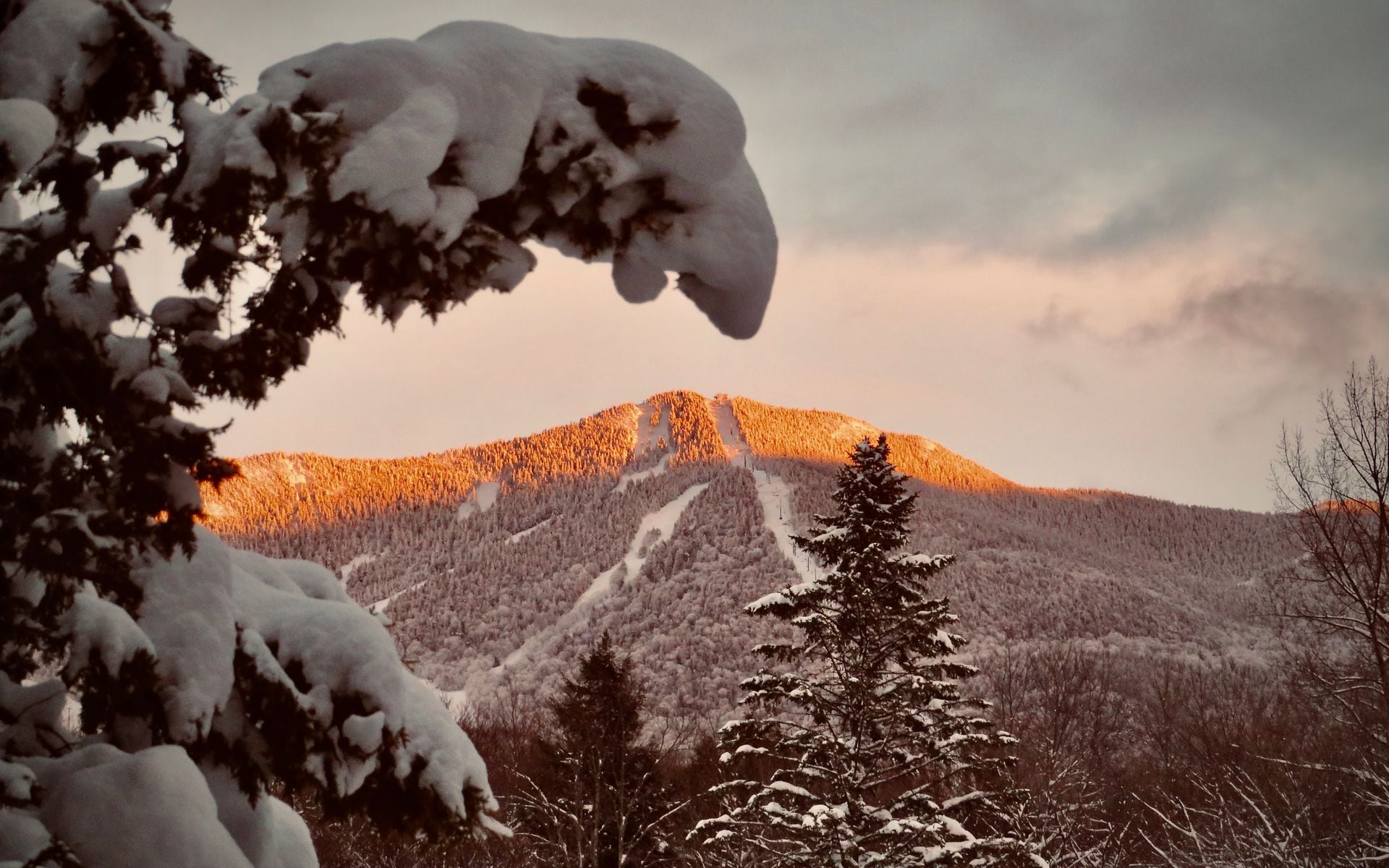
Vermont has been ski country since 1934, when a rope tow on a Woodstock farm hill gave downhill skiing its first commercially operated lift in the United States. Today the state runs more than a dozen alpine ski areas, from Killington Resort's 155-trail, six-peak complex in the central Green Mountains to the 34-trail, locally-owned Magic Mountain Ski Area near Londonderry. Most sit along Route 100, the two-lane highway that traces the Green Mountains from Readsboro in the south to Newport near the Canadian border and connects most of Vermont's ski towns along the way. Flying in? Burlington International (BTV) puts you about 45 minutes from Stowe and Bolton Valley Resort, or roughly 90 minutes from Killington. Albany (ALB) works well for southern Vermont resorts like Stratton Mountain Resort and Okemo Mountain Resort, with drive times in the 60 to 90 minute range.
Browse the full Ski Resorts directory for lift pass details, terrain maps, trail counts, and direct links to resort websites.
What to Expect at Vermont's Ski Mountains
The mountains differ significantly in size, character, and snow reliability. Jay Peak Resort, in Vermont's far north near Newport, pulls moisture off Canadian air masses and the Lake Champlain basin and regularly receives more natural snowfall than any other resort in the state, often topping 350 inches in a strong season. That volume drives its reputation for challenging glades and sustained steep pitches, but the mountain is genuinely remote. Newport is about 10 miles south, and the nearest larger city is Burlington, roughly 75 miles away on I-91 and I-89.
Killington Resort dominates the central Green Mountains with approximately 1,500 skiable acres across six interconnected peaks and 3,050 feet of vertical drop from the K-1 gondola. It opens earlier than any other Vermont resort, sometimes firing snowmaking in late October, and routinely runs terrain into late April. Killington has the largest lift-served terrain in the East and works well for skiers who want multiple days without repeating runs. The access road off Route 4 is dense with lodges and rental shops but has no traditional town center.
Sugarbush Resort, set in the Mad River Valley near the town of Warren, operates two interconnected mountains with 111 trails spread between Lincoln Peak and Mt. Ellen. The valley around Waitsfield and Warren has a distinctly independent character: fewer chain operations, more locally-owned restaurants and inns, and a loyal following among skiers who prefer a less corporate atmosphere. Okemo Mountain Resort near Ludlow covers 121 trails across four peaks and consistently rates well for grooming quality and modern lift infrastructure, making it a solid pick for families and intermediate skiers who want reliable conditions.
Further south, Stratton Mountain Resort runs 97 trails and draws heavily from the New York and Connecticut market given its position in the southern Green Mountains near Manchester. Bromley Mountain Ski Resort, a few miles east of Manchester on Route 11 near Peru, covers 48 trails on a sunny, south-facing mountain with one of Vermont's more forgiving learning environments. Magic Mountain Ski Area near Londonderry is a small, locally-owned area with 34 trails and a cult following among skiers who want natural terrain and honest prices without resort crowds. Smugglers' Notch Resort, on the Jeffersonville side of Route 108, has built its reputation around family skiing, with all-day childcare for infants and toddlers, structured kids' programs by age group, and a village base where families can separate at the mountain and regroup without driving anywhere.
Best Season for Vermont Skiing
January and February are the most reliable months for natural snow coverage and cold overnight temperatures that lock in groomed runs. Most Vermont resorts open between Thanksgiving and mid-December using snowmaking when natural snow is slow to arrive. The stretch between Christmas and New Year's brings the heaviest crowds and highest prices across the state, so book lodging 60 to 90 days out if your trip falls in that window.
March is an underrated month for experienced skiers. Days get longer, lift lines shorten, and snow softens to a forgiving spring consistency by midday on south-facing terrain. Killington Resort often runs into late April and sometimes into early May on its upper peaks. If you prefer shoulder seasons entirely, fall foliage on Vermont's ski mountains peaks from late September into mid-October, when the same terrain that holds snow in January blazes with sugar maples turning red and orange at elevation. Route 100 in foliage season connects many of the same towns you'd visit in ski season. The Vermont Fall Foliage Road Trip covers the full Route 100 corridor with timing and village stops.
When snow melts and mud season passes in May and June, several Vermont ski mountains convert their terrain for summer use with gondola rides, mountain bike parks, and hiking access to the high ridgelines. The Long Trail runs along Vermont's highest peaks, passing above terrain that holds snow in winter. For summer and fall itineraries in the mountains, see Hiking and the Long Trail.
Typical Costs (Estimates)
Walk-up weekend lift tickets at major Vermont resorts such as Killington Resort and Sugarbush Resort typically run $100 to $185 per day. Buying online in advance or choosing non-peak windows reduces that to roughly $80 to $140. Smaller mountains including Bromley Mountain Ski Resort and Magic Mountain Ski Area charge significantly less, generally in the $50 to $90 range for a day pass. Rentals at on-mountain ski shops run approximately $40 to $70 per day for a standard ski or snowboard setup. Off-mountain rental shops in towns like Ludlow near Okemo, Waitsfield near Sugarbush, and Manchester near Stratton typically charge less and often have newer equipment for the same price.
Lodging adjacent to the mountain carries a premium. Slopeside properties at Killington and Stratton routinely run $200 to $400 per night during peak winter weeks, with holiday stretches pushing higher. Base-town inns in Ludlow, Waitsfield, and Warren typically charge $120 to $250 per night at independent properties during midweek stays. Rates across the board drop 20 to 40 percent compared to Friday and Saturday nights, so Tuesday through Thursday trips save money without sacrificing conditions.
How to Book Vermont Ski Resorts
Vermont's ski resorts fall into the two dominant multi-mountain season passes. The Ikon Pass covers Sugarbush Resort, Killington Resort, Stratton Mountain Resort, and Jay Peak Resort, among others. The Epic Pass covers Stowe Mountain and Okemo Mountain Resort. Both passes offer their best pricing on early purchases made before late November, with discounts of 30 to 50 percent compared to window rates. Buying after December reduces the savings substantially, so if you know you're coming to Vermont for ski season, early-fall pass purchases are worth the commitment.
Bolton Valley Resort, about 30 minutes east of Burlington via I-89, participates in the Indy Pass, a network of independently owned ski areas across North America that gives budget-focused skiers access to smaller Vermont mountains for considerably less than a single day at a major resort. The pass suits visitors who want to explore places like Bolton Valley and Magic Mountain without the overhead of a full Ikon or Epic commitment.
Choosing a base town matters as much as choosing a mountain. Stowe is a proper walkable village with independent restaurants, a post office, grocery stores, and the 5.3-mile paved Stowe Recreation Path that runs along the West Branch River. The Killington access road off Route 4 is almost exclusively ski lodges and rental shops without an equivalent town center. For a broader overview of planning your Vermont ski trip, including where to base, which regions to explore, and how to time your visit, the Vermont Travel Guide covers the full picture.
Frequently asked questions
What is the best Vermont ski resort for families?
Smugglers' Notch Resort in Jeffersonville consistently earns top marks for families with young children. The resort operates all-day childcare for kids as young as 6 weeks old and runs structured ski school programs by age group, so adults and children can ski separately on terrain matched to their ability. The village-style base area means everyone can split up at the mountain and reconnect without driving anywhere. Bromley Mountain Ski Resort near Manchester is another solid option for families just learning, with a south-facing mountain that warms and softens by mid-morning and a calmer, less crowded feel than larger resorts.
When does ski season start and end in Vermont?
Most Vermont resorts open between Thanksgiving and mid-December depending on temperatures and snowmaking capacity. Killington Resort is the exception: it often begins snowmaking in late October and has opened as early as the last week of October in strong years. The typical season at most Vermont mountains runs through March. Jay Peak Resort and Killington tend to hold the most terrain through late March and into April, and Killington sometimes operates on select upper trails into early May.
Do I need a car to ski in Vermont?
For most Vermont ski areas, yes. The mountains sit off two-lane state highways without reliable intercity transit. The one notable exception is the Killington Express bus, which runs from White River Junction, where Amtrak's Vermonter train stops, to the Killington access road during ski season. Otherwise, the standard approach is to fly into Burlington International (BTV) or Albany (ALB), rent a car, and drive to your mountain. From BTV, Stowe and Bolton Valley Resort are about 45 minutes. Killington is about 90 minutes. Jay Peak is about 90 minutes north on I-91.
Which Vermont ski resort gets the most natural snow?
Jay Peak Resort, in the far north near Newport, consistently receives the heaviest natural snowfall of any Vermont resort. Its location close to the Canadian border and the moisture it draws from the air above Lake Champlain can push seasonal totals above 350 inches in strong years. Stowe Mountain and Sugarbush Resort also benefit from high elevation and solid natural bases that tend to hold well through March. Killington gets reasonable natural snow but relies more heavily on snowmaking for its early and late season terrain.