Overview
Vermont produces roughly 200,000 tons of milk a year from about 700 dairy farms, most of them family operations in the Champlain Valley, the Mad River Valley, and the Connecticut River towns along Route 5. That milk turns into some of the most recognizable American artisan cheeses: Cabot Creamery's sharp cheddars, made by a nearly 1,000-member cooperative based in Cabot, VT; the buttery washed-rind wheels from Jasper Hill Farm in Greensboro, tucked deep in the Northeast Kingdom; and the fresh chèvre and cultured butter that Vermont Creamery (based in Websterville, just outside Montpelier on Route 14) ships to restaurants nationally.
The Vermont Cheese Trail is the organizing framework for visiting producers. Managed by the Vermont Cheese Council, it is a self-guided route connecting about 40 participating creameries. You can plan a full-day cheese tour or add a creamery stop as a detour along an existing itinerary through the Champlain Valley or central Vermont. Several producers open their aging rooms or farmhouse kitchens for paid tours, generally running $12 to $20 per adult (estimated). Not every creamery offers tours, so check hours and availability before driving out to a back-road address.
The farm-to-table restaurant scene runs alongside the cheese trail. Burlington's Farmhouse Tap & Grill on Bank Street openly names the farms behind its menu, serving LaPlatte River Angus beef and Vermont-made cheese as the base of its burgers and plates. In Quechee, Simon Pearce serves New England cuisine in a converted 19th-century mill on the Ottauquechee River, working with farm-sourced seasonal ingredients and presenting dishes in the glassware blown on the premises. Over in Burlington, American Flatbread Burlington & Mothership Brewery builds wood-fired pizzas with regional dairy and Vermont-grown produce. At these places, local sourcing is built into the base menu, not a premium add-on.
If you want broader context for planning a Vermont trip that pairs farm visits with other activities, the Vermont Travel Guide covers all six regions and can help you orient your itinerary around the areas with the densest concentration of creameries and farm-to-table restaurants.
What to Expect
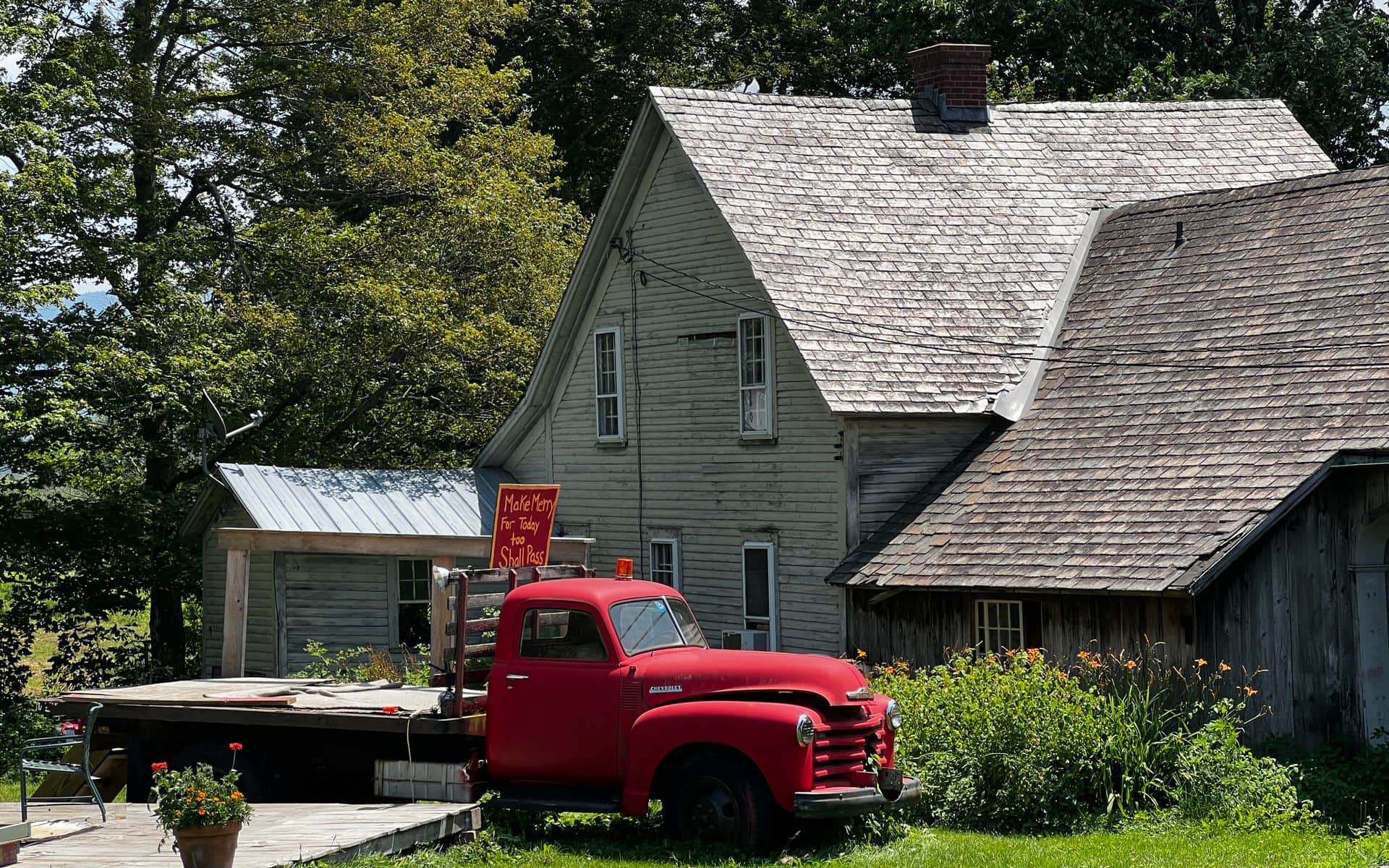
Creamery visits cover a wide range. Shelburne Farms, on the shores of Lake Champlain just south of Burlington, operates as a working 1,400-acre farm estate with formal tours, a farm store, and a cheddar aged on site from the milk of the Brown Swiss herd grazed on the property. The farmhouse cheddar here is one of the most distinctive you will taste in Vermont: earthy, complex, and unmistakably tied to a specific piece of land. Other producers along the Cheese Trail are smaller: a barn off a dirt road in Addison County, a handwritten sign on Route 2 outside St. Johnsbury, a cooler stocked with fresh wheels on the honor system. Both ends of that spectrum are worth your time.
Farm stands open around late May and run through mid-October in most of Vermont. June brings early strawberries, snap peas, and herbs from Champlain Valley fields. August is peak: tomatoes, sweet corn, basil, and summer squash arrive together. September and October shift to winter squash, apples, and storage crops. The Northeast Kingdom tends to run a week or two behind the valley because of cooler temperatures at higher elevations. Many farm stands operate part-time or on the honor system, accepting cash or card.
For dining, reservations matter more in foliage season (late September through mid-October) than any other time of year. Restaurants in Woodstock, Burlington, and Stowe fill up during that four-to-six-week window. If you're traveling the Vermont Fall Foliage Road Trip route, plan dinners two to three days ahead rather than counting on walk-in availability. The same applies to ski weekends in January and February around Stowe and Killington.
Best Season
The Vermont farm-to-table experience is year-round, but each season has a distinct character worth knowing before you plan.
Spring (late February through April) is maple sugaring season. You can visit sugarhouses across Caledonia County, Addison County, and Washington County while sap runs and evaporators boil. The steam rising off a sugar shack on a cold March morning is one of Vermont's most specific experiences. Many sugarhouses sell direct; a quart of medium amber syrup runs about $18 to $25 (estimated), and some operations offer free samples during boiling season.
Summer (June through August) is peak farm stand season. You will find roadside stands along Route 2 between Montpelier and St. Johnsbury, on Route 12 south through Northfield toward Randolph, and along Route 7 through the Champlain Valley. This timing lines up well with Vermont's cycling and gravel routes, which pass within reach of many farm stands and creameries in the flatlands west of the Green Mountains.
Fall (September through mid-October) layers harvest with foliage. Apple orchards press fresh cider, farms sell pumpkins and winter squash in volume, and creameries release aged wheels held through summer. Many of the best fall foliage drives in Vermont pass within a few miles of Vermont Cheese Trail creameries in the Northeast Kingdom and central Vermont, making it straightforward to combine a leaf-peeping drive with a farm stop.
Winter (November through March) is quieter on farms but active in restaurant kitchens. Vermont's hospitality towns run their dining programs year-round, and winter menus lean into the seasons: braised Vermont pork, roasted root vegetables from cold storage, and cheese boards assembled from producers across the state. This is also when you can taste certain aged wheels that spent the summer in underground caves.
Typical Costs
Cheese at farm stores: $8 to $18 per half-pound, depending on style and producer (fresh chèvre on the lower end; aged, clothbound cheddar or washed-rind wheels on the higher end). Many producers offer tasting samples free of charge when staff are present, and some sell smaller tasting portions for $3 to $5.
Creamery tours: $12 to $20 per adult where available (estimated). Not all creameries offer formal tours; the Vermont Cheese Council website lists which producers welcome visitors and whether tours are scheduled or by appointment.
Farm-to-table dinners at established Vermont restaurants: roughly $28 to $65 per person for a full dinner including drinks (estimated). Burlington and Woodstock restaurants tend toward the higher end of that range. Rural farm diners and lunch service run lower.
Farm stand produce: generally in line with grocery-store pricing, sometimes slightly above for specialty items like heirloom tomatoes or freshly pulled garlic. Buying direct from Vermont farms is not a luxury premium; the difference is quality, particularly for peak-season corn and tomatoes picked that morning.
Maple products at sugarhouses: a quart of grade A maple syrup runs $18 to $25 at most farm stores (estimated); smaller gift sizes start around $8 to $10. Specialty products like maple cream or granulated maple sugar run a bit more.
How to Plan
Start with the Vermont Cheese Council website, which lists all Vermont Cheese Trail participants, their addresses, retail hours, and whether they offer on-farm tours. Many rural creameries keep irregular hours or are seasonal; a quick call before driving 45 minutes on back roads is worth the time. The trail covers the full state, so it makes sense to pick a region rather than trying to cover north-to-south in one trip.
For restaurants, check OpenTable or contact restaurants directly if you are traveling in foliage season (late September to mid-October) or on a holiday weekend. Many Vermont restaurants are small operations without a lot of walk-in capacity. Lunch service is less crowded and typically lower-priced than dinner at the same kitchen.
Cheese trail days pair naturally with other Vermont activities that cover similar geography. A morning at a creamery in Addison County can connect to an afternoon fishing on the Otter Creek or the New Haven River. The Breweries, Cideries and Tours directory lists additional food-and-drink producers, several of which are within a short drive of Vermont Cheese Trail stops.
If you are based in Burlington, the Champlain Valley is the most efficient circuit: Shelburne Farms is 7 miles south of downtown, several Addison County creameries are 30 to 45 minutes south on Route 7, and the drive back north via Route 116 passes farm stands and orchards the whole way. For central Vermont, a loop out of Montpelier on Route 2 east and Route 12 south brings you through some of the most productive farming country in the state within an hour in either direction.
Frequently asked questions
What is the Vermont Cheese Trail?
The Vermont Cheese Trail is a self-guided driving route managed by the Vermont Cheese Council that connects about 40 participating creameries across the state. Producers range from large cooperatives like Cabot Creamery (based in Cabot, VT) to small farmstead operations making a few hundred pounds of cheese per week. You can download a current map from the Vermont Cheese Council website and build your own itinerary by region. Some producers offer formal tours or tastings; others simply have a farm store where you can buy direct. Hours vary by season, so confirm before you drive out.
When is the best time to visit Vermont farm stands?
Farm stands in the Champlain Valley and central Vermont generally run from late May through mid-October. The peak window for variety is August through early September, when tomatoes, sweet corn, basil, and summer squash all overlap. In the Northeast Kingdom and at higher elevations around the Green Mountains, the season runs a week or two shorter. October brings squash, apples, and cider. By mid-November most outdoor farm stands have closed for the season, though a handful of larger operations stay open year-round.
Do I need a reservation at Vermont farm-to-table restaurants?
During foliage season (late September through mid-October) and on ski weekends in January and February, yes. Popular restaurants in Burlington, Woodstock, Stowe, and Manchester fill up quickly during those windows, and walk-in waits can run long. The rest of the year, many Vermont restaurants are more accommodating for walk-ins, especially at lunch. Calling ahead or booking online a few days out is still worth doing for dinner at smaller operations that seat fewer than 50 people.
Is Vermont cheese made from raw milk?
Some of it is. Several Vermont creameries use raw milk for aged cheeses, which under federal law must age a minimum of 60 days before sale. Jasper Hill Farm in Greensboro and a number of smaller producers in the Northeast Kingdom and central Vermont make raw-milk wheels, including some of the most complex clothbound cheddars and alpine-style rounds you will find in New England. Fresh cheeses like chèvre and fromage blanc are typically pasteurized. Farm store staff can tell you exactly which wheels are raw-milk if that matters to you.