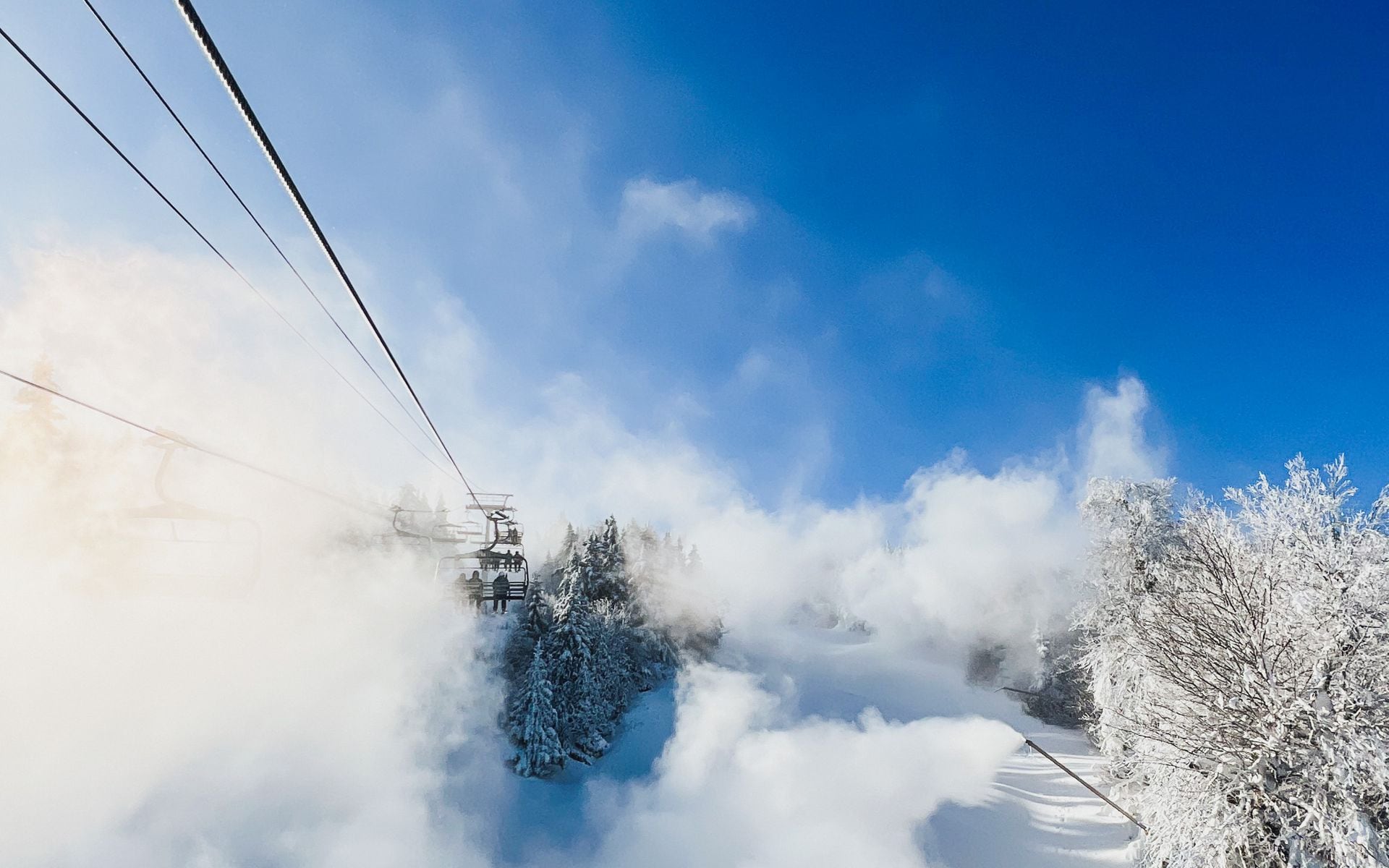
What to Expect at Killington
Killington sits in Central Vermont along US Route 4, about 20 miles west of Quechee Gorge and roughly 2 hours from Burlington (BTV). It isn't a traditional New England village. What you get instead is a resort corridor: East Mountain Road turns north off Route 4 and climbs about 2 miles through a strip of lodges, rental shops, and bars before depositing you at the base of the mountain. The surrounding terrain is rolling Green Mountain forest with no town center to speak of.
The mountain runs across six interconnected peaks, Killington, Skye, Snowdon, Ramshead, Bear Mountain, and Sunrise, totaling 155 trails and about 3,050 feet of vertical drop. That scale creates room for real progression. Ramshead holds long beginner terrain, Snowdon and Skye carry the cruisers that make up most of the intermediate map, and Bear Mountain hosts some of the East's most recognized steep runs, including Outer Limits, a mogul run with a sustained pitch that shows up on most lists of the toughest trails in New England. Pico Mountain, two miles west on Route 4, is typically bundled with a Killington lift ticket and serves as a quieter alternative on busy weekends when East Mountain Road is packed.
If you want a proper Vermont village for evenings and off-mountain wandering, Montpelier is about 35 miles north, roughly a 40-minute drive on Route 4 and Route 2. Woodstock, 20 miles east on Route 4, is closer and works well for a dinner out.
What to Do at Killington
Winter is the headline. Skiing and snowboarding at Killington typically opens before any other Vermont resort, sometimes before Thanksgiving in late November, and the mountain frequently operates into late April. The resort averages around 250 inches of natural snowfall annually, and an extensive snowmaking system covers most of the trail network, which matters during lean natural-snow winters. The K1 Express Gondola runs about 2.5 miles to Killington Peak, Vermont's second highest summit at 4,241 feet. On powder mornings, experienced skiers are in the gondola queue well before the 8 a.m. opening time. First tracks disappear fast when there's been overnight snowfall.
Day lift tickets run approximately $90 to $200 depending on how far ahead you buy and the time of year, with peak holiday weekends and walk-up pricing at the higher end. Buying online two to four weeks out typically saves $40 to $60 per day. The Ikon Pass covers Killington and can reduce per-day costs to under $50 if you're planning a multi-day trip. Ski and snowboard rental shops along East Mountain Road charge roughly $45 to $75 per day. Beginners should note that Killington runs a learning center with dedicated beginner terrain on Ramshead, well separated from the high-traffic summit areas.
In summer, Killington operates a mountain bike park with about 40 miles of trails, including expert downhill courses that host the US Open Pro Downhill race each season. The K1 gondola serves uplift for bikers through the summer months. Hikers can reach the summit ridge on foot from the base area, and the gondola runs for sight-seeing during foliage season. In this part of the central Green Mountains, fall color typically peaks in early to mid-October, a bit later than the Northeast Kingdom and a week earlier than the southern valleys. For more on timing a fall visit, see the Best Ski Resorts in Vermont guide, which covers shoulder-season options across the state.
Getting There and Getting Around
Burlington International (BTV) is the nearest major airport, about 2 hours north via I-89 south to Exit 1 near Quechee, then Route 4 west for about 20 miles. From Boston Logan (BOS), plan on 2.5 to 3 hours, typically via I-93 north to I-89 north, then Route 4 west from Quechee. From New York City, the drive is roughly 4.5 hours north on I-91 through Connecticut and Massachusetts, then Route 4 west from White River Junction. Albany (ALB) is another option for travelers coming from the west, about 2.5 hours away via I-87 north and Route 4 east.
A car is essential. There is no meaningful public transit to Killington. During ski season, the resort runs shuttle buses between on-mountain lodges and the base areas, so once you're checked in you may not need to move the car. The access road, East Mountain Road from Route 4 to the base lodge, climbs quickly and ices over in winter. Snow tires or all-wheel drive with traction control are strongly advisable from December through March, and occasionally into April. Check the Vermont 511 road conditions line before any mountain drive after a storm.
Best Time to Go
For skiing, January and February deliver the most reliable snow and coldest temperatures, which means the snowmaking system works best and conditions hold through the week. Mid-December to mid-March is the reliable window for good coverage across all six peaks. Spring skiing here deserves more credit than it gets. In April, many trails are still open with soft corn snow in the afternoon sun, lift lines are short, and day ticket prices drop. Locals who ski Killington regularly often prefer April weekdays to any January weekend for that reason.
Summer is quieter but worth considering if mountain biking or hiking is the goal. Late June through early September gives the best weather and the most open trail network. Foliage in the central Green Mountains peaks in early to mid-October; the gondola typically runs for sight-seeing through mid-October, though you should confirm dates on the resort's calendar before planning a trip around it. Avoid the mud season window in late March through early May for anything other than late-season skiing, as the surrounding back roads get soft.
Good to Know Before You Go
The Killington Grand Resort Hotel sits on East Mountain Road with direct access to the lifts, a heated outdoor pool, and on-site dining. It's the most convenient option for skiers who want to walk to the gondola without moving the car for a week. Rates typically run $200 to $400 per night in ski season, higher for suites and holiday weekends, and include amenities that offset the cost if you're skiing multiple days.
For breakfast before heading up the mountain, Maple Sugar & Vermont Spice on US Route 4 in Mendon, a few miles east of the resort, serves pancakes, egg plates, and a sampler breakfast with Vermont maple syrup from their own trees. It's casual and fills up on weekend mornings, so arriving before 9 a.m. gets you ahead of the post-ski-shop crowd. The gift shop sells maple products and local goods if you want to bring something home.
Killington has no town center, so evenings off the mountain can feel thin if you're staying on East Mountain Road for a whole week. Woodstock, 20 miles east, has solid dinner options and is easy to reach in 25 minutes. The East Mountain Road strip itself holds a few well-known bars and restaurants that run lively apres-ski hours from about 3 to 7 p.m. on ski days, which is the social anchor of the resort experience.
Frequently asked questions
Is Killington the biggest ski resort in Vermont?
Yes. Killington Resort runs 155 trails across six linked peaks with about 3,050 feet of vertical drop, making it the largest ski area in Vermont and consistently the largest in the eastern United States by skiable terrain. Pico Mountain, two miles west on Route 4, is typically included with a Killington lift pass and adds quieter terrain to the overall mountain experience.
When does Killington ski season start and end?
Killington typically opens before any other Vermont resort, often in early to mid-November and sometimes before Thanksgiving, depending on natural snowfall and snowmaking conditions. The resort frequently closes last in the state as well, with skiing sometimes running into late April or early May. Check the resort website for current season dates before booking, as opening and closing depend on annual conditions.
Do I need a car to visit Killington?
Yes. There is no practical public transit to Killington from any major airport. Burlington International (BTV) is about 2 hours away and is the closest major airport. During ski season, on-mountain shuttle buses connect lodges and the base areas, so you may not need to drive daily once you arrive. But reaching Killington itself requires a rental car or driving your own vehicle.
What is there to do near Killington besides skiing?
Woodstock village, 20 miles east on Route 4, offers restaurants, galleries, and the Billings Farm and Museum, and is about a 25-minute drive from the resort. Montpelier, Vermont's state capital with a strong independent food scene, is about 35 miles north and takes roughly 40 minutes. In summer, Killington's own mountain bike park with gondola uplift and hiking trails provides on-mountain activities.