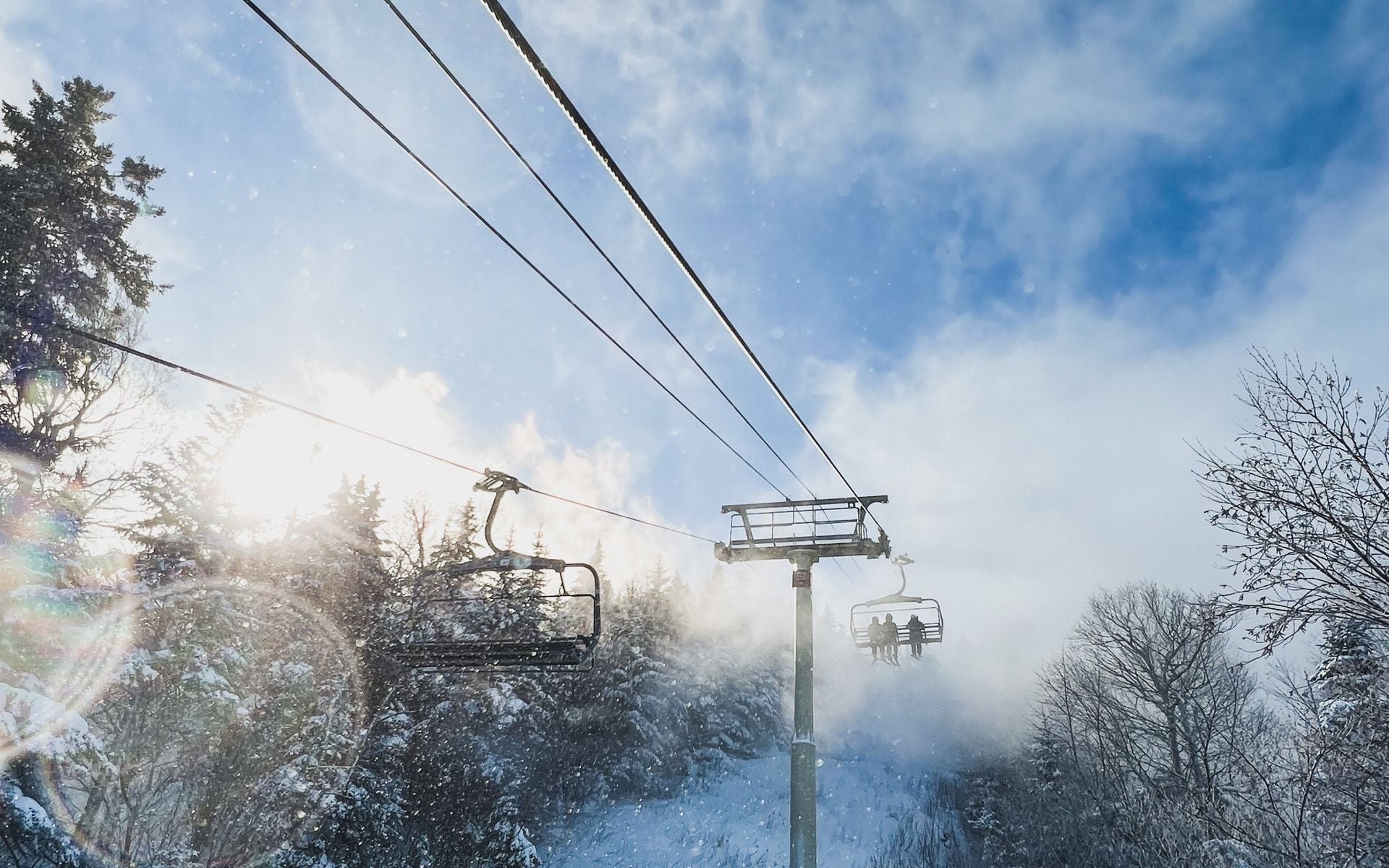
Vermont’s ski season stretches from late November into April at some mountains, but the months when snow quality, open terrain, and lift lines all line up in your favor narrow it down to a much tighter window.
The Short Answer
If January or February fits your schedule, book those months. That’s when Vermont ski mountains have the deepest snowpack, the most trails open, and temperatures cold enough to keep snowmaking running through any warm spells. Killington Resort opens earlier than any other Vermont mountain, sometimes running a limited operation before Thanksgiving, and closes later than anyone else in the state, sometimes into May. If you can only get away in March, don’t write off the spring season, especially at northern mountains like Jay Peak Resort near the Canadian border, where natural snowfall totals routinely top 300 inches in a good year. The Vermont Ski Season Guide breaks down each mountain’s typical open and close dates in more detail.
Early Season: November and December
Vermont’s ski mountains generally start snowmaking in October and open their first trails between mid-November and Thanksgiving. Killington Resort is the outlier here, historically firing up its snowmaking operation sooner than any other mountain in the Northeast and sometimes posting the earliest open date in the region. What you get in November and early December is real skiing: enough terrain to fill a full day, smaller crowds than peak weeks, and hotel rates that haven’t climbed to their January highs. What you give up is coverage. Expect 30 to 50 percent of terrain to be open at most resorts during early December, sometimes less if temperatures have run warm. A week of above-freezing temperatures at 2,000 feet can undo a lot of snowmaking base fast, so watch the forecast before you book.
Jay Peak Resort, in Jay, Vermont, about 35 miles north of Newport and close to the Quebec border, benefits from a latitude and topography that funnel moisture from Quebec’s cold air masses and storm tracks rolling off the Great Lakes. The result is more natural snowfall than any other mountain in Vermont, which means Jay Peak’s early-season skiing tends to be stronger than what you’d find at central or southern Vermont resorts in November and December. If December is your only window and natural snow matters more than resort amenities, Jay Peak is where to look first.
The Peak Window: January and February
January through mid-February is when Vermont ski terrain is at its most complete. Most resorts, including Sugarbush Resort in Warren’s Mad River Valley and Smugglers’ Notch Resort in Jeffersonville, have their full trail counts open by mid-January. Stowe, sitting below the state’s high point at 4,395 feet on Mount Mansfield, holds strong conditions from early January through late February most years, with the upper mountain consistently in the best shape of the season.
The tradeoff is price and crowds. Martin Luther King weekend in January and Presidents’ Day weekend in February are the two biggest ski weekends on the Vermont calendar. Window rate single-day lift tickets at the major mountains during those weekends run roughly $100 to $170 per person (estimated), and lodging near the mountains books out weeks or months in advance. Ski mid-week, ideally Tuesday through Thursday in late January, and those same mountains offer lift tickets closer to $60 to $120 per day (estimated), shorter lines at the lifts, and actual tables available at lunch. For a closer look at how those costs stack up across a full trip, see is Vermont expensive to visit.
March and the Spring Window
March is an underrated month for skiing in Vermont. By early March, days are longer, the sun angle is higher, and the snowpack has usually settled into a firm base that softens to corn snow in the afternoon. That’s the surface that rewards carving and makes runs feel faster and more forgiving without the scraped-ice feeling of a cold January morning. Killington Resort, with its six peaks and 155 trails, tends to run the strongest late-season operation in Vermont and sometimes continues past April into May in good snow years. Okemo Mountain Resort near Ludlow holds solid conditions through mid-March most years across its four peaks, and the terrain variety there means you can find groomed runs at nearly any exposure.
The risk in late March is a warm spell. Vermont’s Green Mountains don’t hold off spring the way elevation in the Rockies does, and a week of 50-degree days above 3,000 feet will collapse a March snowpack quickly. If you’re planning a late March trip, watch the 10-day forecast before you commit to lodging, and give yourself flexibility.
Which Mountain You’re Headed To Changes the Calculus
Where you’re skiing in Vermont shifts the best-timing conversation considerably. Jay Peak Resort, in the far north near the Canadian border, gets more natural snow than any other Vermont mountain and has the terrain to put it to use: steep glades, 76 trails, and a tram that accesses the upper mountain. January and February there are as good as anything Vermont offers. The trade-off is a more remote location, roughly 40 miles northeast of Newport and about 90 minutes from Burlington International (BTV). There’s less in the surrounding area, but if powder days are the point, that remoteness is part of why Jay Peak stays less crowded than the central Vermont mountains.
Stratton Mountain Resort in southern Vermont sits closer to the New York and Connecticut market, about 2.5 hours from Albany (ALB) and roughly 4.5 hours from New York City. Stratton’s summit at 3,875 feet holds snow reasonably well, but weekends in January and February fill up with skiers from the New York metro area faster than at northern mountains. Plan for that if you’re heading south, or go during the week and you’ll find a noticeably different experience.
Sugarbush Resort in Warren’s Mad River Valley catches the same storm patterns that favor central Vermont, and its two interconnected mountains give you 111 trails across significant vertical drop for a multi-day trip. If you’re flying into Burlington (BTV) and want central Vermont skiing, Sugarbush is about 90 minutes from the airport and works well as the anchor for a January or February trip.
Practical Tips Before You Book
Book lodging early for peak weekends. Inns and hotels near Stowe, Killington, and Sugarbush fill for Presidents’ Day weekend sometimes three to four months in advance. Mid-week stays in the same weeks can be booked much closer in. The Vermont Travel Guide covers the state’s main regions if you want to build a multi-day trip that combines skiing with other stops.
Think through your pass situation before assuming one saves money. Multi-resort passes like Ikon (covering Sugarbush, among others) and Epic (covering Stowe) cut costs meaningfully if you’re skiing five or more days across the season. On a single long weekend, the window ticket rate versus the pass price breakdown isn’t always obvious. See Best Time to Visit Vermont for more on timing and trip structure, and run the actual numbers for your itinerary before buying.
Vermont’s ski roads are two-lane state highways. Route 100 runs up the Mad River Valley to Sugarbush and continues north through the heart of the state, and Route 4 connects I-89 to Killington. Both are well-maintained, but a nor’easter that drops a foot overnight means conditions can change fast. Snow tires are the standard for Vermont winter driving; all-season tires are marginal on icy two-lane hills. Check real-time road conditions through the VTrans 511 system before heading to the mountain in a storm.
If Vermont’s on your radar beyond ski season, the Vermont fall foliage route covers the state’s other major draw, and fall color in the Northeast Kingdom can overlap with early snow at elevation in mid-October.
Frequently asked questions
When does Vermont ski season start?
Most Vermont ski mountains open trails in mid-to-late November, with Killington Resort typically running the state’s earliest operation, sometimes before Thanksgiving. Jay Peak Resort and Stowe generally open by late November. Smaller mountains and those in southern Vermont, like Stratton Mountain Resort and Okemo Mountain Resort, often open in December. Conditions in November depend heavily on temperatures and snowmaking windows; a warm stretch can delay meaningful early-season skiing by weeks regardless of where you’re going.
Which Vermont ski resort gets the most natural snow?
Jay Peak Resort, in Jay, Vermont, about 35 miles north of Newport near the Canadian border, averages over 300 inches of natural snowfall per year. That figure is consistently higher than any other Vermont mountain and results from its northern latitude and terrain that catches moisture from Quebec storm systems and Great Lakes weather patterns. If natural powder is the main draw, Jay Peak in January or February is the strongest choice in the state.
Is March too late to ski in Vermont?
March is a solid month to ski in Vermont, especially at Killington Resort, Jay Peak Resort, and Sugarbush Resort. Conditions in early March are typically strong, with a settled base, longer days, and good grooming. By mid-to-late March, the risk of a warm spell increases and snowpack at lower elevations can thin. Killington is the best late-season bet, sometimes staying open into May. If you’re planning a March trip, early March is safer than late March, and targeting a mountain with high elevation and northern exposure improves your odds considerably.