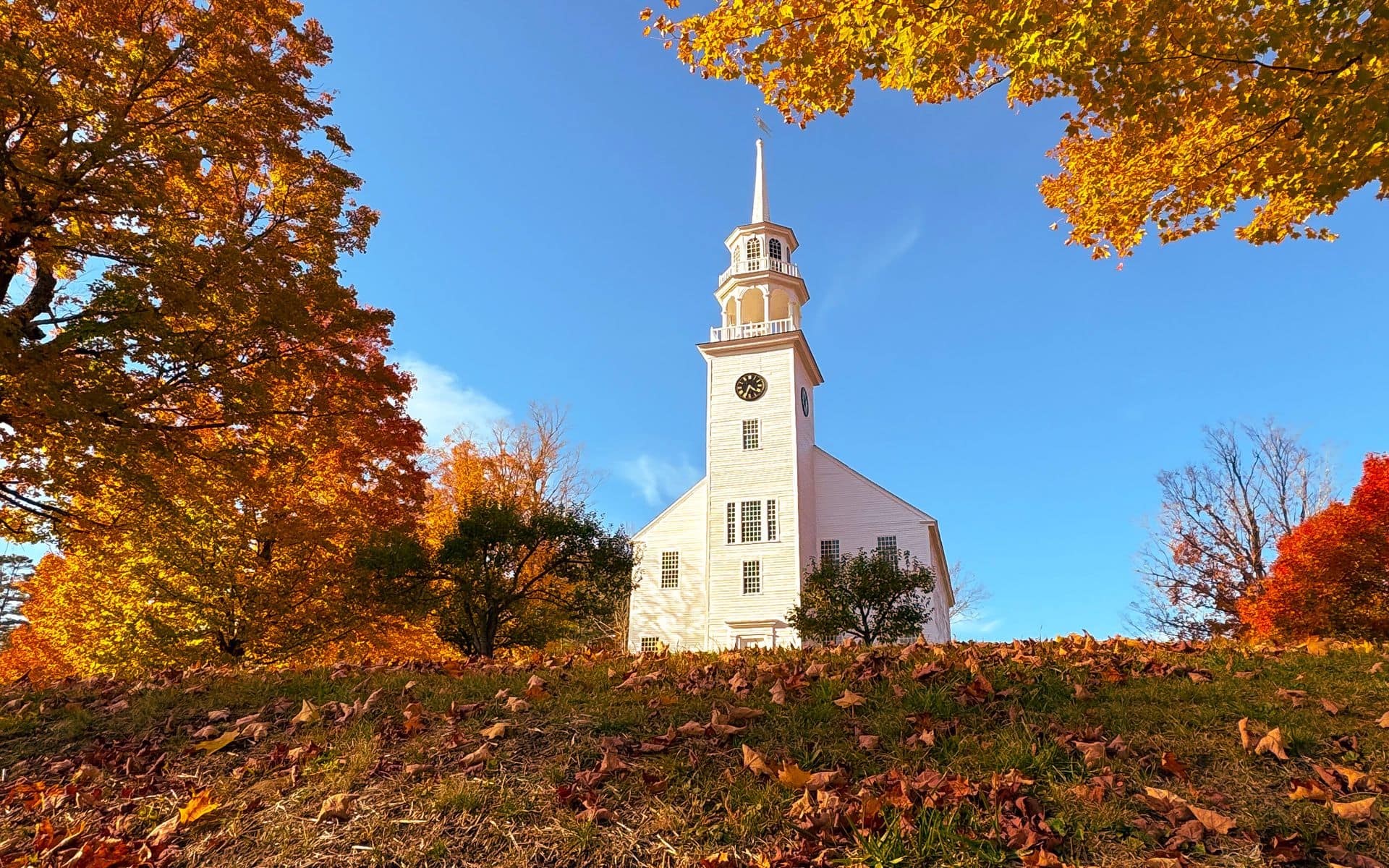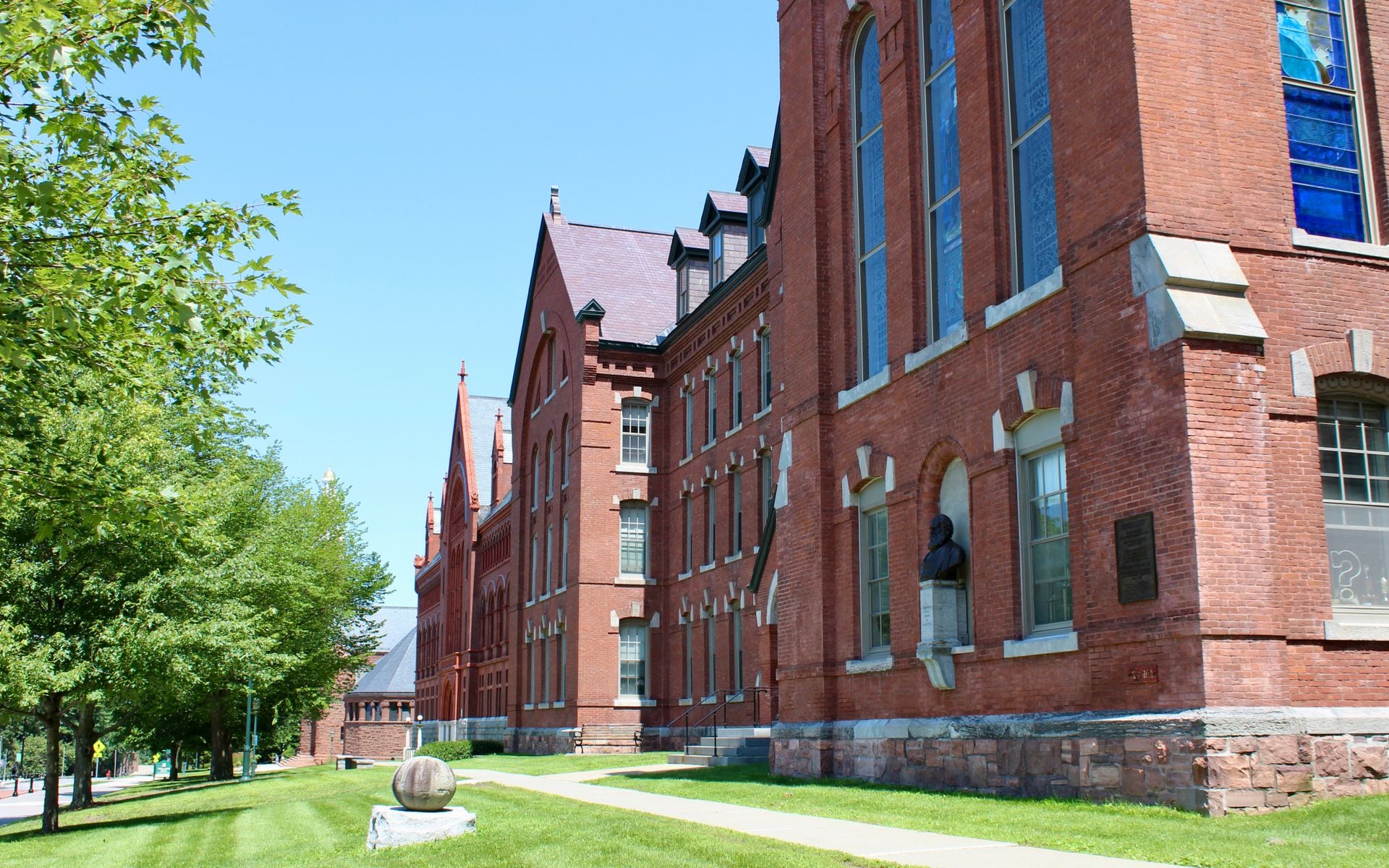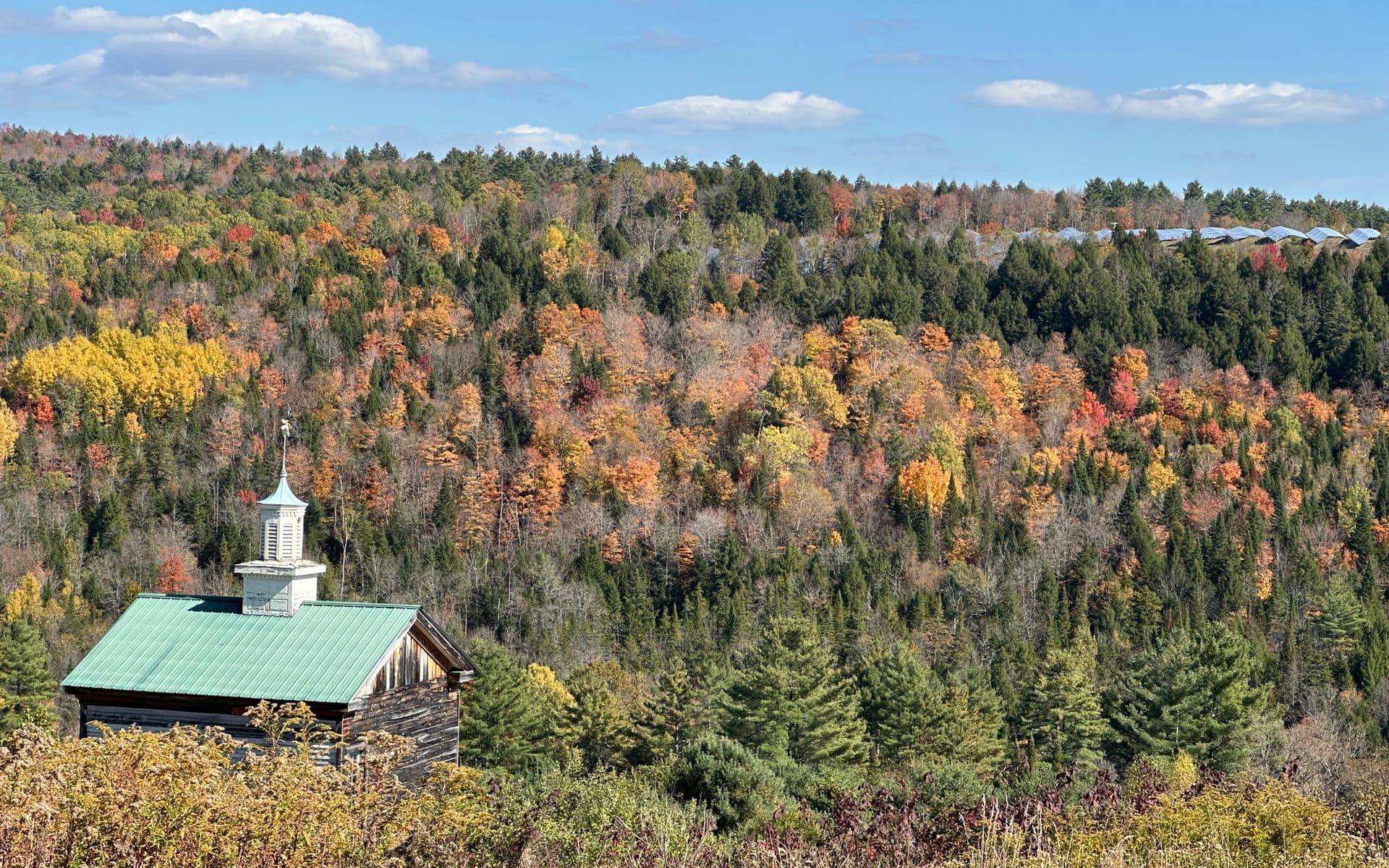
Vermont fall foliage runs from mid-September through mid-October, but peak color arrives at different times in different parts of the state. Here is what drives the timing, where to go by date, and how to plan around the most competitive lodging weekend of the year.
The Short Answer, by Region
Peak foliage in Vermont does not happen all at once. The color rolls from north to south and from high elevation to low over the course of roughly three weeks, which means the timing of your trip and your specific destination both matter. The Northeast Kingdom, covering Orleans, Caledonia, and Essex counties in Vermont’s far north, tends to see peak color around September 20 through 28 in a typical year. The Stowe and Mount Mansfield area follows within a few days, with color cresting roughly September 23 through October 1. Central Vermont, including Killington and the Mad River Valley around Sugarbush, typically peaks from late September into the first days of October. Woodstock and the Upper Valley usually reach full color October 1 through 8, and southern Vermont, from Manchester south to Brattleboro, closes out the season with peak windows running roughly October 5 through 12.
Columbus Day weekend, the second full weekend of October, is the most-booked weekend in Vermont all year. It catches peak color across the central and southern half of the state, while northern areas are still showing color on the lower hillsides and valley floors. Inns in Woodstock, Manchester, and Killington fill completely weeks in advance. If your trip centers on Stowe or the Northeast Kingdom, target the last week of September instead. The color is at or near peak and Columbus Day crowds are still a week away. For more on how the Vermont Travel Guide covers each region’s foliage window, the regional pages break down specific routes and drives worth building a trip around.
How the Color Moves Across Vermont
Vermont’s foliage gradient follows two rules: north before south, and high before low. The high ridgeline of the Green Mountains, above roughly 3,000 feet, begins showing color as early as the first week of September, while valley floors can stay largely green for another three to four weeks. You can watch this gradient from any overlook on the Mount Mansfield Auto Toll Road, which climbs partway up Vermont’s highest peak (4,395 feet above Stowe) and stays open from late spring through mid-October. By early September the summit zone and the upper spruce-fir belt show yellowing and early reds while the sugar maples on the hillsides below are still fully green.
Sugar maples are the primary driver of Vermont’s fall color. Their leaves shift from green through yellow and orange to deep red, and a hillside of peak sugar maples is what the photographs you’ve seen are showing. Bigtooth aspen and white birch turn gold alongside them. American beech turns copper-brown and holds its leaves well into October and even November on north-facing slopes, long after the maples have dropped. This layering of tree species is part of why Vermont’s foliage season lasts several weeks rather than a single event. The sequence also explains why a drive through the Green Mountains in the first week of October can still show color, even if the Northeast Kingdom and the high ridges went past peak ten days earlier.
What Drives the Timing
Day length is the reliable trigger. As days shorten after the summer solstice, trees begin drawing chlorophyll out of their leaves once overnight temperatures cool reliably, exposing the yellows and oranges already present and triggering red pigment production in sugar maples. Because day length follows the calendar and latitude, the broad peak windows are consistent from year to year. The Northeast Kingdom is almost always ahead of Woodstock. High ridges are almost always ahead of valley floors.
Temperature and moisture, though, push the actual peak date by as much as two weeks in either direction. Cool nights in the 40s (Fahrenheit) starting in late August or early September set up strong red and orange color in sugar maples. Warm days in the 60s combined with those cool nights give the best display. A hard frost in early September can kill leaves before they develop full color, resulting in a patchy brown-and-drop rather than the deep reds most visitors expect. A summer drought often produces muted yellows instead of the intense oranges and reds of a wet-summer year. The best foliage years follow adequate rain through July and August, warm September daytime temperatures, and consistently cool nights from late August onward. You cannot predict this on a typical booking timeline of two to three months out, which is exactly why most experienced Vermont foliage travelers build a day or two of slack into their trip.
Where to Go and When
If your trip centers on the Northeast Kingdom, plan for the week of September 20 through 27. St. Johnsbury is the most practical base, sitting about 40 miles from Burlington via I-91 (roughly 45 minutes). The back roads north into Craftsbury, around Lake Willoughby in Westmore, and along the dirt roads of the Barton and Island Pond areas carry some of the most concentrated sugar maple coverage in Vermont with none of the inn prices or traffic you will find in Stowe during the same window.
For Stowe, the last full week of September is typically your best target, though some years the color crests in the first few days of October. The 5.3-mile paved Stowe Recreation Path, which runs north of the village along the West Branch river, puts you below a wall of hills that turn in full sequence from high to low. The Route 108 drive through Smugglers’ Notch, walled by 1,000-foot cliffs and open only in fair-weather seasons, shows big color on the cliff faces and in the boulder field below. Note that Route 108 closes to through traffic in winter, usually by late October or early November, so if you are combining a foliage trip with early ski season, plan accordingly.
For Woodstock and the Upper Valley, October 1 through 8 is the sweet spot in most years. The village green, the Ottauquechee River banks, and the Route 12 corridor north toward Barnard all reward slow driving. Route 4 between Rutland and Quechee becomes genuinely congested on Columbus Day weekend, both Saturday and Sunday. Arriving Thursday, staying through Tuesday, and missing the weekend entirely is a practical move that cuts road time and improves the inn situation considerably. Our detailed breakdown on When to See Vermont Fall Foliage goes deeper on the annual calendar and the regional tracker that runs through October.
Southern Vermont, including Manchester, Stratton Mountain, and the Brattleboro corridor along I-91, peaks later than most visitors expect. Columbus Day weekend is right in that window for many southern towns. The Battenkill River valley around Arlington and the Route 7A corridor between Manchester and Bennington carry excellent color in that first week to ten days of October. At the same time, this is the first part of Vermont that most Northeast drivers reach after crossing into the state from Massachusetts, which makes it worth building into a longer trip even if it is not the primary destination. For a full overview of how to sequence the regions and what each season offers, the Best Time to Visit Vermont page covers foliage alongside ski season and summer.
Practical Planning Tips
Reserve lodging at least six to eight weeks before your target peak window, and earlier for Columbus Day weekend. October lodging in Stowe and Woodstock during foliage season ranges from around $180 to $450 per night at inns and B&Bs (estimated range; varies by property and year). Midweek travel in the last week of September or the first week of October cuts both rates and road congestion significantly compared to the surrounding weekends.
Check the foliage reports that Vermont’s Department of Forests, Parks and Recreation issues every week starting in early September. These are organized by region and grade color from just starting through past peak. They are the most reliable real-time signal available before you drive. The Northeast Kingdom section typically shows the first above-average color in the state, usually in the third week of September. Watching that report for two or three weeks before your trip tells you whether the season is running early, on time, or late.
One thing most first-timers miss: the color often looks better at mid-morning and late afternoon than it does at midday. Slanted light catches the reds and oranges in a way that flat overhead sun does not. Rainy mornings followed by clearing afternoons produce some of the most vivid color days of the year, because wet leaves pick up and reflect the light differently than dry ones do. If you get a gray morning, do not write off the day.
After the Leaves Come Down
Foliage season fades into ski season without much of a gap. Vermont’s major ski mountains start snowmaking in October and open first trails in November. Killington, in central Vermont, frequently opens before Thanksgiving and often carries some skiing into May, giving it the longest season of any resort in the region. If you are still deciding between Vermont ski towns for a winter trip, comparing the two most popular mountain bases helps narrow the choice: see our post on Stowe vs. Killington for a breakdown of terrain, village character, and price differences. Once you know where you are headed, our best time to ski in Vermont guide covers which weeks tend to produce the best snow coverage and the shortest lift lines.
The transition weeks in late October and early November are genuinely underrated for a Vermont visit. Rates drop substantially from their foliage-season highs, the villages are quiet before ski traffic picks up, and the bare ridgelines offer long views into New Hampshire and New York that the leaf canopy obscures in September and October. It is not a bad time to drive the back roads at all.
Frequently asked questions
What is the single best week to visit Vermont for fall foliage?
No one week is best for the entire state. The last week of September, roughly September 22 through 29, tends to catch peak color simultaneously in the Northeast Kingdom and the Stowe area. For Woodstock, Killington, and the Mad River Valley, the first full week of October is typically the better target. For southern Vermont and Manchester, Columbus Day weekend (second full weekend of October) is usually the right window.
How do I know if peak foliage has already passed?
Look at two things: the percentage of leaves still on the trees, and how many brown or bare branches you see. A hillside at true peak has most leaves still attached and showing full color, with only scattered browns and no large bare patches. Once you start seeing 20 to 30 percent bare branches and drifts of fallen leaves on the ground, you are past peak for that spot. Vermont’s Department of Forests, Parks and Recreation publishes a free weekly foliage report by region every September and October, which is the easiest way to get current ground-truth before you drive.
Does it rain during Vermont foliage season?
September and early October are relatively dry months compared to Vermont’s spring, but rain showers are common. A steady overnight rain before a foliage drive is not necessarily a problem. Wet leaves catch morning light well, and many peak-color days start overcast and clear by late morning. Pack a rain layer regardless. The bigger weather risk is a hard early frost (which can brown the leaves before they fully color) or a nor’easter in October (which strips leaves early). Both are uncommon in September but more possible as October progresses.
Can I see good foliage in Vermont after Columbus Day?
Yes. Lower elevations in southern Vermont and the Connecticut River valley often hold usable color through the third week of October. Towns along Route 9 west of Brattleboro, the Battenkill valley near Arlington, and the valley floors around Bennington can show color as late as October 18 through 22 in a warm autumn. It is past peak in the north and at elevation by then, but the southern and low-lying areas have not yet fully dropped. A late-October trip is also significantly easier to book and cheaper to stay.
Is the Northeast Kingdom worth the drive for foliage?
If you want the best color in the state with the fewest crowds and the lowest lodging prices, yes. The Northeast Kingdom covers a large swath of sugar maple forest in Orleans, Caledonia, and Essex counties, reaches peak color a full week or more ahead of southern Vermont, and sees a fraction of the tourist traffic that Stowe and Woodstock attract during the same period. Lake Willoughby in Westmore and the back roads north of St. Johnsbury toward the Canadian border are among the most consistently impressive foliage routes in New England.