Pico Mountain at Killington sits about two miles west of Killington’s main base on Route 4 in Mendon, Vermont. Most people booking a Killington ski trip never think about it. That is worth correcting, because Pico Mountain at Killington runs on the same lift ticket as the main resort and offers a genuinely different day on snow: quieter terrain, shorter lift lines, and a layout that rewards intermediate skiers and families in ways that Killington’s busier main mountain does not. Whether you make Pico your home base for the week or save it for a single strategic visit on a crowded Saturday, knowing how it fits into the larger resort is useful before you plan your days.
What Is Pico Mountain at Killington?
Pico Mountain is a separate peak within the Killington Resort system. It has its own base lodge, its own parking area, and its own lift network, all accessed from a dedicated entrance on Route 4 roughly two miles west of the turnoff for Killington Road. The two mountains are connected by a gondola interconnect, so you can ski from Killington’s terrain over to Pico’s upper mountain, spend the day there, and ride back before the lifts close.
Killington acquired Pico in 1996, and the two mountains share lift access while keeping separate base operations. Pico’s base area, a lodge with a rental shop, ski school, and cafeteria, is compact and straightforward compared to Killington’s sprawling multi-base setup. First-time visitors sometimes read that description and expect something underwhelming. In practice, the smaller footprint is one of the things that makes Pico work well. You walk in, get on a lift, and spend your time skiing rather than navigating.
The Terrain at Pico Mountain
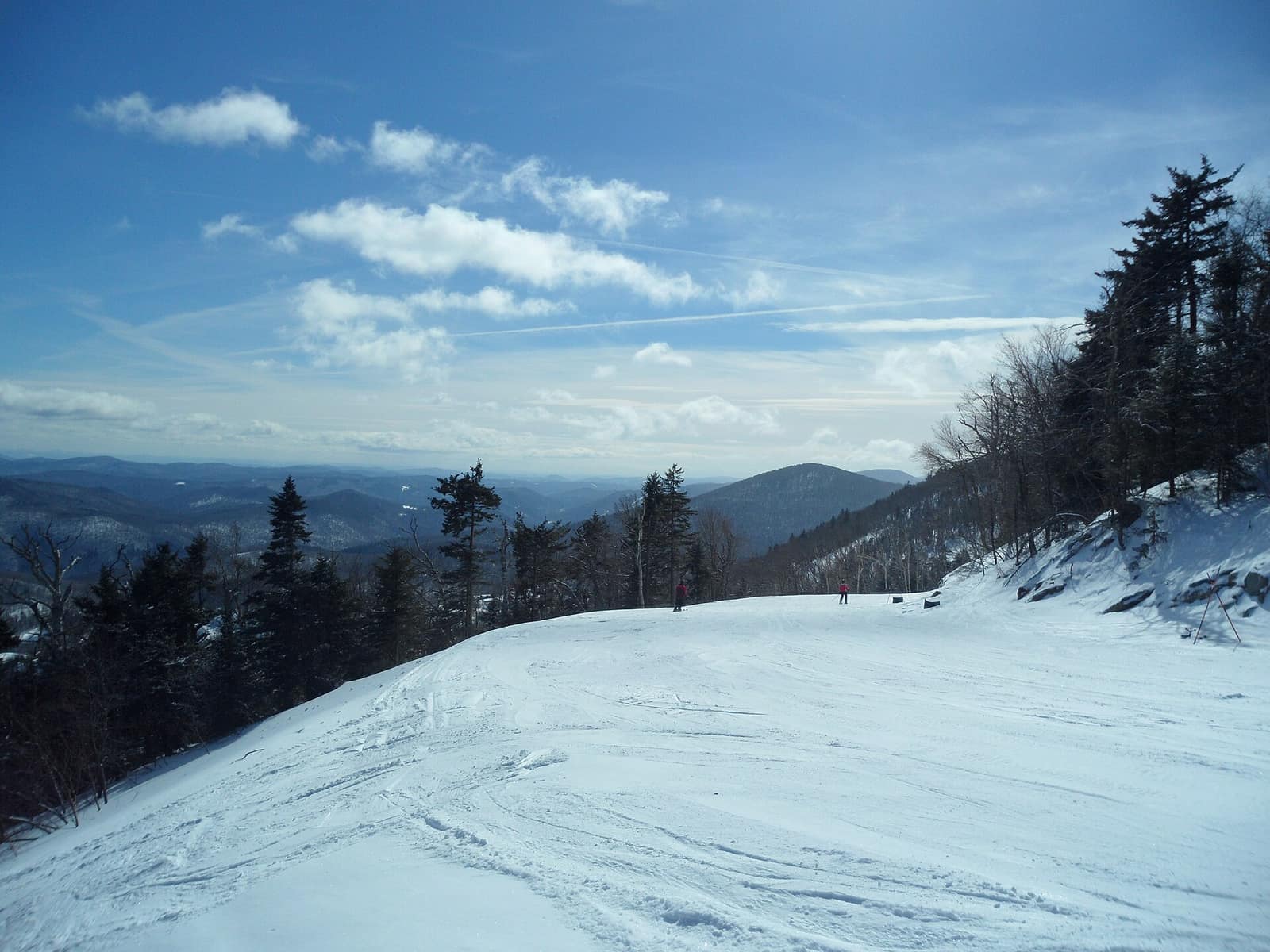
Pico Mountain covers roughly 2,000 vertical feet across a trail map that skews blue and green. The bulk of the mountain’s runs are intermediate, wide enough to open up your turns and long enough to feel like real skiing rather than a loop you repeat every twelve minutes. The front face below the upper lifts is where most of the intermediate cruising happens, with groomed trails that hold up well on high-traffic days because the crowds are lighter than on Killington’s main peaks.
Expert terrain sits on the upper portion of the mountain. These runs are real black diamonds, steep enough to be interesting, but they are shorter and fewer than what you find at Killington’s main mountain or at Stowe’s Mansfield side. For a full picture of where Vermont’s skiing and snowboarding options rank against each other, the activity page covers the major resorts across the state.
The beginner learning area at Pico is positioned at the base, away from the main lift traffic. Newer skiers do not have to merge with faster skiers to reach the learning terrain, which matters more than it sounds when you have kids in lessons or someone on skis for the first time.
Getting to Pico from Killington
Two routes get you there: driving or skiing the gondola interconnect.
Driving is the simpler option if you are basing out of Pico for the day. From Killington village, head down Killington Road to Route 4 and go west toward Rutland for about two miles. Pico’s entrance is on the left side of the highway. The parking lots fill at a slower pace than Killington’s main base areas. On most weekend mornings, arriving by 9:00 a.m. gets you a spot within easy walking distance of the lodge.
Skiing the interconnect takes more planning but gives you access to both mountains on a single day. From Killington’s base area, follow signs for the gondola interconnect to Pico. The crossing takes roughly 15 minutes, and you arrive at Pico’s upper mountain ready to ski down. Reverse the trip at the end of the day before the lifts stop running, typically around 4:00 p.m. Check Killington’s website or the lift operator at the base for the interconnect schedule on the day you plan to use it, since weather and wind can affect gondola operations.
Your Killington lift ticket covers Pico without any add-on cost. Season passes and multi-resort passes that include Killington also cover Pico on the same terms.
Why Pico Sees Fewer Crowds Than Killington
Killington is the largest ski area in the eastern United States. That scale is part of the appeal, but it also means the main mountain draws a lot of people. On a February Saturday or during Presidents’ Day week, lift lines at the K1 Express Gondola can stretch 30 to 45 minutes or more. The access road on Killington Road backs up on peak mornings, and the main base areas get loud and crowded by midday.
Pico Mountain gets a fraction of that traffic. Part of the reason is location: it sits off Route 4 rather than on the main Killington Road, so it is easy to miss if you are not looking for it. The resort also does relatively little to promote Pico as a standalone destination compared to the main mountain. The result is that a busy Saturday at Pico often feels like a midweek day at Killington: lift lines measured in single-digit minutes, trails with enough room to ski edge-to-edge, and a cafeteria you can navigate at a normal pace.
This is not a small thing. If your Killington trip falls on a long weekend or during a holiday week, a planned day at Pico is one of the most practical moves you can make.
Who Pico Mountain Is Best For
Intermediate skiers who want to make consistent runs without fighting for trail space will find Pico rewarding in a way that Killington’s most popular terrain is not on a crowded day. The runs are long enough to be satisfying, the mountain is manageable enough to learn in a morning, and you can lap the upper lifts without spending half your run time in a queue.
Families with skiers at different levels tend to do well at Pico. The terrain spread covers beginners through solid blue skiers in a smaller geographic footprint than the main Killington mountain, so meeting back at the base lodge between runs is easy and the logistics stay predictable. For groups with kids under 10, Pico’s layout makes the day simpler to manage.
Strong skiers chasing double-black terrain will find Pico limited by comparison to Killington’s main peaks. The upper expert runs at Pico are real, but they are a different experience than Killington’s Superstar or the Front Four at Stowe. For a direct comparison of Vermont’s two most-discussed ski mountains and which type of skier each fits best, see the Stowe vs. Killington post. For those skiers, Pico works better as a change of pace than as the primary destination.
Tickets, Hours, and Rental Access
Killington lift tickets cover Pico at no additional cost. Tickets purchased in advance through Killington’s website are significantly less expensive than window pricing, which runs among the highest in Vermont. The gap between advance and window pricing narrows closer to your visit date, so buying four to six weeks ahead is the better approach. For a full breakdown of how Vermont ski season timing affects both conditions and pricing, the best time to ski in Vermont guide covers the season week by week.
The base lodge at Pico opens around 8:30 a.m. on most operating days and lifts close at 4:00 p.m. Ski and snowboard rentals are available at the base lodge if you prefer not to carry gear from a separate location. The rental operation is smaller than Killington’s main rental shops, so arriving at or near opening time is advisable if you need gear on a busy weekend day.
Ski school operates at Pico and is worth considering if you have beginners in the group. The learning area at the base is well separated from the main lift traffic, and morning group lessons for kids and adults are available.
Where to Stay and When to Go
Most lodging near Pico Mountain is along Route 4 in Mendon and the lower Killington corridor, the same stretch that serves the main resort. Properties range from ski-in/ski-out condominiums on Killington Road to smaller inns and motels on Route 4 closer to Pico’s entrance. If you plan to base out of Pico most days, any property along Route 4 between Rutland and Killington Road puts you within a few minutes of the parking area.
For timing, Killington typically opens in November, sometimes before Thanksgiving, and runs through late April or into May in a strong snow year. January through early March delivers the most consistent conditions across the mountain. Presidents’ Day week in February is the busiest period, so the weeks immediately before and after that window offer a better balance of conditions and crowd levels.
For a day specifically at Pico, a Tuesday or Wednesday in January is the target if you have scheduling flexibility. The Killington corridor quiets to a fraction of its weekend pace and Pico on those mornings is as close to a private mountain as you can get without buying one.
For more context on the Killington area, the Killington visitor guide covers the town, the resort layout, and what to do when you are off the mountain. For a wider look at Vermont’s ski options, the Vermont ski resort guide covers the major mountains across the state.
Frequently Asked Questions
Does my Killington lift ticket cover Pico Mountain?
Yes. A standard Killington day ticket or season pass covers Pico Mountain without any add-on. Killington Resort operates both mountains under the same lift access agreement.
How far is Pico Mountain from Killington?
Pico’s base area is about two miles west of the Killington Road turnoff on Route 4, in the town of Mendon. The drive from Killington village takes five to ten minutes depending on road conditions.
Is Pico Mountain good for beginners?
Pico has a dedicated beginner area at the base with its own lifts, separated from the main trail traffic. It is a reasonable option for first-day skiers, though Killington’s Snowshed base area is also worth comparing if your group has multiple beginners.
Can I ski from Killington to Pico Mountain?
Yes. A gondola interconnect links the two mountains. You ski or ride from Killington’s terrain to the interconnect departure point, take the gondola across to Pico’s upper mountain, ski the day there, and return the same way. Check the lift schedule on arrival since wind and weather can affect gondola operations.
When is the least crowded time to ski Pico?
Weekdays in January and early February are the quietest windows. Presidents’ Day week in February, Thanksgiving weekend, and Martin Luther King Jr. weekend are the three busiest stretches of the season. If those dates are unavoidable, skiing Pico rather than Killington’s main mountain is one of the best ways to avoid the worst of the congestion.